
How Mosaic Installations Create Shared Event Moments
Plan a physical Mosaic Wall or Digital Mosaic with clear advice on guest participation, artwork, venue space and reveal timing.
A mosaic installation gives guests a shared artwork to build from their photographs. For MooMuu events, there are two distinct formats: a physical photo-tile wall or a digital artwork on screen. Choose the guest journey first, then plan the image, space and reveal around it.
For corporate events, that final image might be campaign creative, a product visual or a brand mark. At a wedding or private celebration, it may be a portrait of the couple, a family photograph or artwork chosen to suit the setting. The principle is the same: participation is visible, cumulative and given a meaningful visual outcome.

What makes a live mosaic installation work
A mosaic is not simply a wall of photographs. Its appeal comes from the shift in perspective. Up close, guests see their own portraits and those of friends or colleagues. From a distance, those individual contributions become part of something larger. That duality gives the experience more depth than a standard photo moment, particularly at events where shared purpose matters.
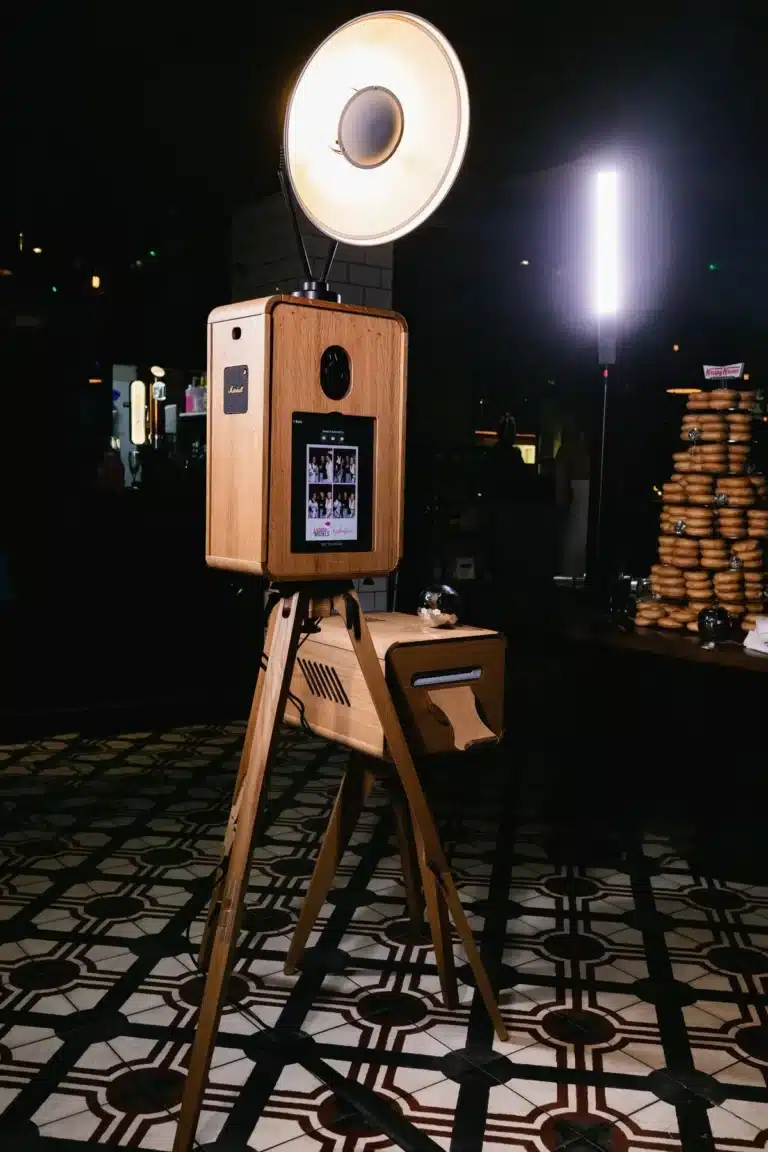
MooMuu’s Mosaic Wall Live is the physical photo-tile experience. Guests take a photograph at the included ICON Booth, receive a print to keep and a second, coded tile, then place that tile on the wall. A MooMuu team manages the booth, guest flow and mosaic build.
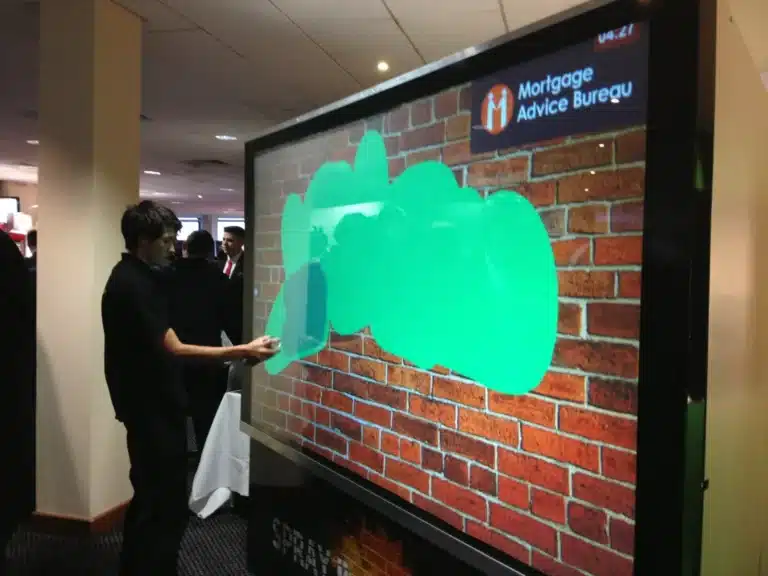
The Digital Mosaic is a separate screen-based experience. Guests take or upload photographs through a QR code or branded link, including from remote locations. Choose attended on-site delivery or remote monitoring during an agreed operating window. Reliable internet, display arrangements and any optional moderation are planned in advance; the finished high-resolution artwork is delivered digitally.
Start with the event objective
The right creative direction depends on what the installation needs to achieve. This is where corporate and private events begin to differ.
For brand and corporate events
For a corporate event, start with a clear campaign image, product silhouette or anniversary mark. Physical Mosaic Wall Live is typically planned around approximately 400–800 contributions, with bespoke formats available. Those are photo tiles, not a count of unique guests or an hourly throughput promise. Agree the format and participation target before choosing the artwork.
Avoid treating the final image as an afterthought. If the artwork is too detailed, too dark or overloaded with small text, it may lose impact as the mosaic develops. A design-led supplier should review the asset early, considering contrast, colour balance and how the finished piece will be viewed both close up and across the room.
The guest journey matters just as much. Consider who is attending, how long they have between sessions, and whether the event is designed for quick throughput or longer conversations. At a busy trade show, photographs need to be captured efficiently and the interaction should be clear from the aisle. At an internal conference, the mosaic may sit within a more relaxed networking space, allowing guests to revisit it over the day.
For weddings and private celebrations
At a wedding, the chosen image, wall header and print design can complement the wider styling. If you would like the finished physical artwork framed, discuss that separately; do not assume framing is included in the standard installation.
A mosaic is particularly effective during the drinks reception or evening party, when guests are naturally moving between spaces and looking for a point of connection. It gives different generations an easy shared activity. People can contribute their photograph, look for familiar faces and watch the picture come together without being put on the spot.
Scale changes the experience
Plan the operating area as well as the finished picture. For example, a 700-tile physical wall is approximately 1.4m × 1.25m, while the operating space is around 3m × 3m depending on the wall size. Confirm the complete ICON Booth, tile station and wall layout with your venue, with a standard UK power socket within 10 metres. For Digital Mosaic, agree the screen, sightlines, AV and reliable internet separately.
Placement is equally important. Put the mosaic where guests can see its progress, but do not create a bottleneck at the bar, entrance or route between dining and facilities. It works best with a little breathing room around it: enough space for a small group to watch, point out their image and take in the overall design.
Sightlines deserve practical thought. Guests should be able to appreciate the full image from a distance, then approach to find their own photograph. At corporate events, the wall often performs well near a networking area or at the edge of a stage-led room. At weddings, it may sit alongside the evening guest experience, provided it is not fighting the dance floor, band or key photographic moments for attention.
The photography must feel considered
The quality of the individual guest portraits determines how the mosaic feels at close range. Even though each image will become a small tile, guests still look for themselves. Flat lighting, awkward cropping or inconsistent framing can make the experience feel less polished than the finished artwork deserves.
A professionally managed photography setup brings consistency to the mosaic while keeping the interaction relaxed. The styling can be aligned with the event, whether that means a refined neutral portrait, a branded campaign treatment or a more playful creative direction. This is not about forcing every guest into the same pose. It is about creating photographs that look good individually and work cohesively together.

Participation is designed, not assumed
People are more likely to take part when they understand the payoff quickly. The installation should communicate the final image, the simple action required and the fact that each guest contribution matters. Clear visual cues work better than a dense block of instructions.
Staffing also shapes the atmosphere. Attendants should be able to welcome guests, explain the experience in a sentence and keep the flow moving without making it feel transactional. At a corporate activation, they may also help connect the interaction to the campaign message. At a private event, a lighter touch is usually right: warm guidance, then space for guests to enjoy it in their own way.
Do not expect every attendee to participate immediately. A visible progression is often the best invitation. Once guests see colleagues, friends or family members appearing in the design, curiosity does much of the work. This is why placing the mosaic where it can be observed matters as much as placing the camera position conveniently.
Plan the reveal, not just the build
A mosaic has a natural finale: the moment the completed image is clear enough to be seen as a whole. For a short event, the number of tiles and capture pace should be planned so that the artwork develops satisfyingly within the available time. If the mosaic is too ambitious for the guest count, it can look unfinished. If it completes too early, the sense of progression disappears.
For a conference or exhibition spanning several days, a slower build can become part of the narrative, with each day’s guests adding to the same result. For an evening celebration, a more concentrated format may be appropriate, allowing the finished piece to be admired before guests leave.
Agree the reveal time, completion options and handover before the event. The physical artwork is yours to keep unless the proposal states otherwise; Digital Mosaic supplies a high-resolution digital artwork. Any extra files, framing or display equipment should be identified in your chosen proposal.
See the Mosaic Wall Live package for the physical guest journey, or explore illustrative campaign ideas when developing a corporate brief.
A well-planned mosaic gives an event more than a photograph to keep. It creates a shared point of attention while the room is still full, turning individual appearances into a picture that belongs to everyone in it.
Plan an installation around your guests
Request a Mosaic Wall Live proposal or enquire about Digital Mosaic. Share your date or approximate month, venue, guest numbers and the image you would like to create. We will confirm availability, the right format and a tailored price. Your plans do not need to be final.
Compare MooMuu experiences or read the product FAQs.