
7 Wedding Reception Photo Experiences Compared
Compare Oak, Digital, ICON, GLAM, AI portraits, Sketch Bots and the Photo Mosaic Wall, with practical advice on what each brings to your wedding reception.
Start your wedding reception photo experience with a simple question: what would you like guests to take away? A colour photograph, a black-and-white portrait, a digital image and a pen-drawn artwork are different keepsakes. These seven MooMuu options help you compare the experience as well as the finished result.
Jump to an experience
1. Luxury Oak Booth: attended colour photographs
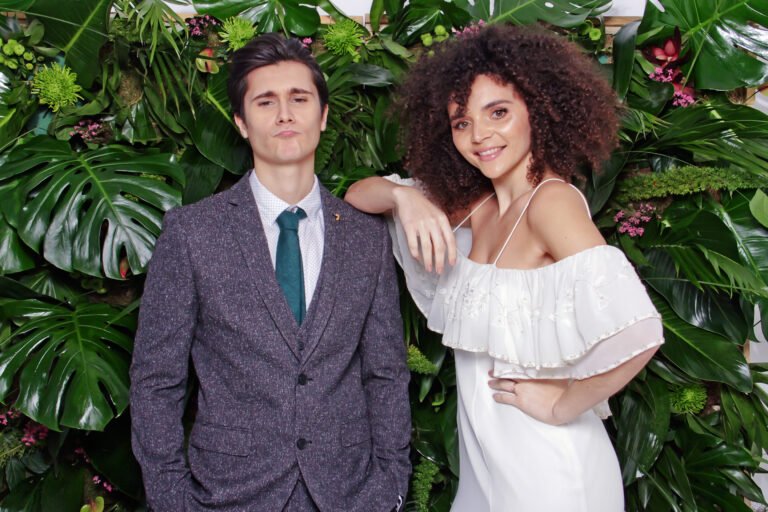
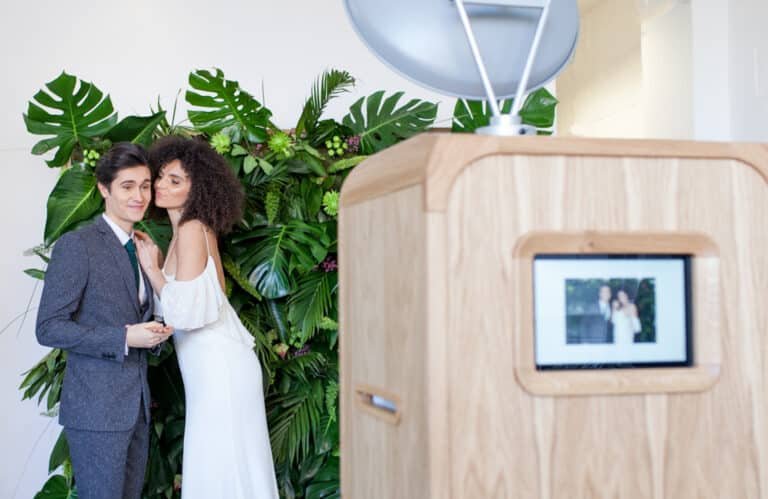
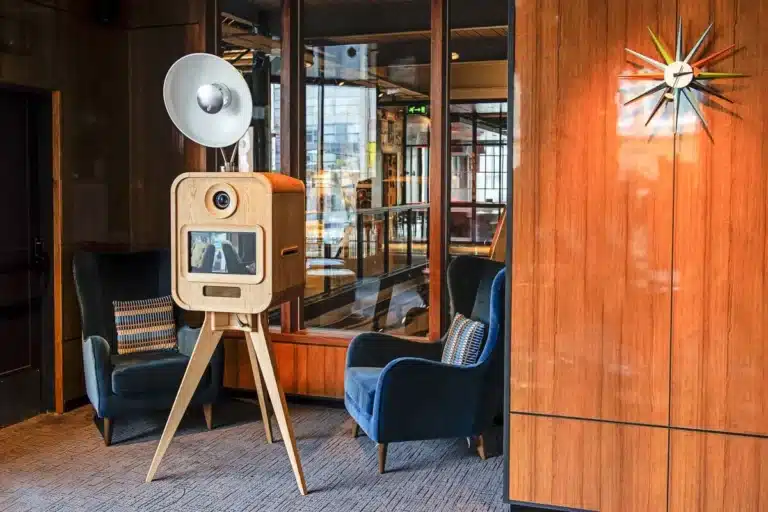
The Luxury Oak Booth offers colour photographs, prints and digital sharing in a timber-finished booth. An attendant helps guests during the agreed hire period. Consider it when you want printed photographs and a booth design that feels at home within your venue styling.

Confirm the backdrop, print artwork and package details before booking. If you want a photo guest book, ask for it in the quote: MooMuu’s guest-book option includes an additional photograph and attendant assistance to help guests place the photo and write a message.
2. Digital Booth: self-service without prints
The Digital Booth is a self-service, print-free choice. It is worth considering when digital photographs suit your plans and you do not need a printed keepsake from the booth. Choose its position carefully: a large freestanding backdrop is not included as standard.
MooMuu provides installation, testing, collection and remote support; an attendant does not normally stay on site. That is a different service model from the attended booths. Confirm the sharing arrangements and operating period so your venue and guests know what to expect.
3. ICON Booth: a different design for colour portraits
The ICON Booth is another attended option for colour photography, prints and digital sharing. Compare its appearance with the Oak Booth and decide which fits your room, rather than assuming one suits a particular age group or type of wedding.
Think about the whole picture: the booth, backdrop, guest space and print artwork. Share photographs of the proposed location and discuss where the queue can form without blocking doors or venue staff. MooMuu does not supply props; if you plan to bring accessories, discuss them in advance.
4. Signature GLAM: black-and-white portraits
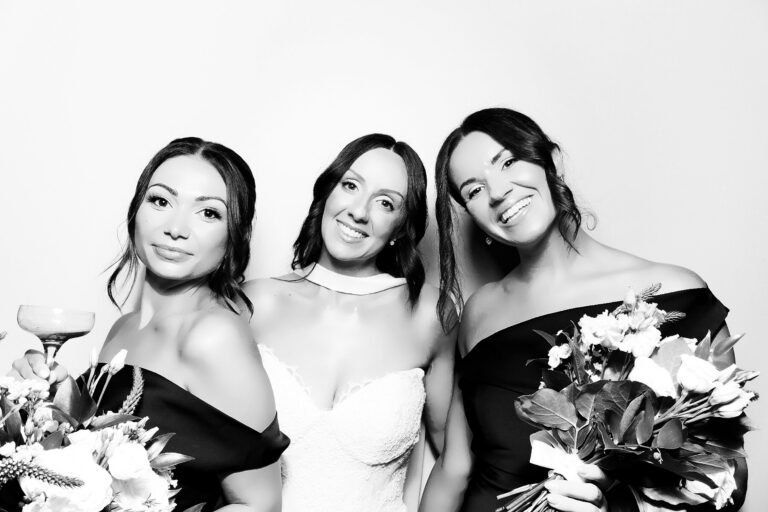
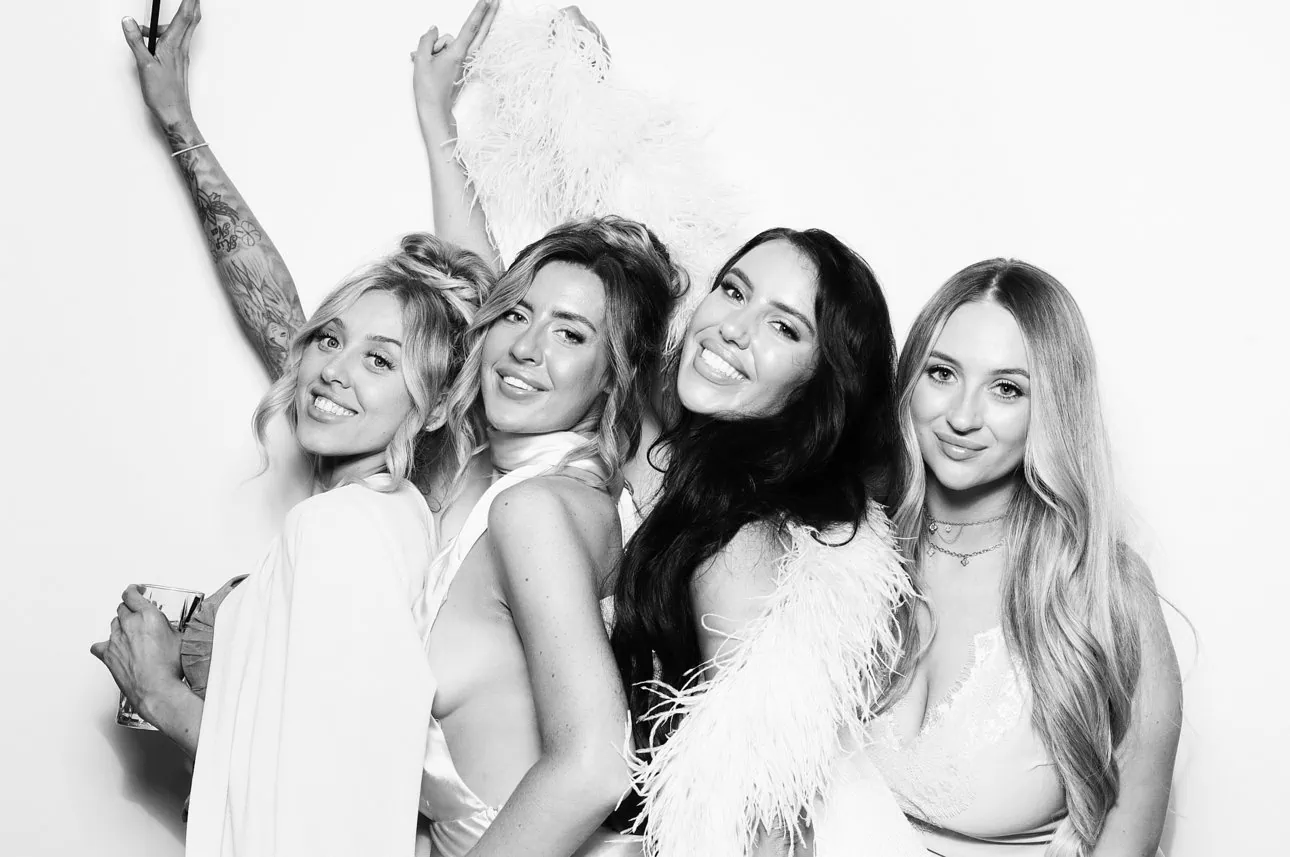
The Signature GLAM Booth combines a professional camera, controlled studio lighting and bespoke black-and-white processing. Prints and digital sharing are available within the quoted arrangements, with an attendant helping guests during the agreed period.
GLAM makes the portrait the main feature. Compare real examples, discuss a black or white backdrop and keep posing comfortable. A couple, a small group or an individual portrait can each work; check framing with the attendant rather than trying to squeeze everyone into one photograph.
5. AI Experience: a creative portrait transformation
The AI Experience turns a guest portrait into an agreed creative style with attendant support. Digital delivery is included; prints and animation are optional and must be confirmed. AI results can vary and are creative interpretations, not documentary photographs of the day. Discuss the style and internet requirements when planning.
6. AI Sketch Bots: artwork drawn with a pen
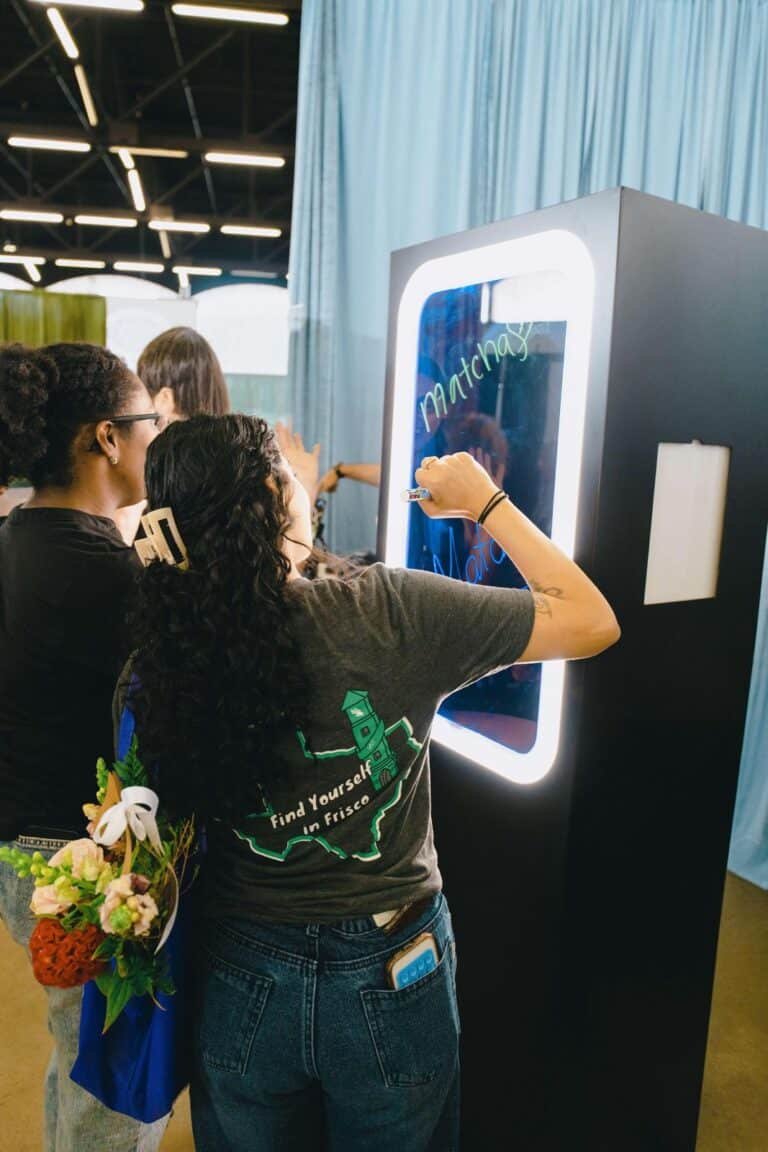
AI Sketch Bots create an AI illustration from a guest photograph, then draw it with real pen on paper using robot arms. This is neither a human illustrator nor an ordinary photo print. Standard packages include two bots; capacity depends on drawing style, bot count and operating time, so agree a realistic guest plan rather than assuming every guest will receive a portrait.
7. Photo Mosaic Wall: a collective wedding picture
The physical Photo Mosaic Wall includes an ICON Booth. Guests receive a photograph and a coded tile to add to the larger picture, with team support. Agree the master image, tile count and completion arrangements. The screen-based Digital Mosaic is a separate format; do not assume it is the same package or that another booth’s images automatically feed into it.
Check practical details before choosing
Share your guest numbers, venue, available space and running order. Confirm power, lighting, internet where required, delivery access and time for setup and collection. The Oak Booth cannot be carried up or down stairs, so a suitable lift or ramp and the full route need assessment wherever levels change.
Choose operating hours that give guests time to participate without competing with speeches or dinner. Discuss seated arrangements and other access needs in advance. These experiences complement the reception; they do not replace your wedding photographer. The wedding experience guide can help you narrow the options.
Send MooMuu your date, venue and preferred experiences for a tailored quote. An enquiry does not reserve your date; the team will confirm availability, inclusions and the steps needed to book.