
What Should You Look For When Hiring a Wedding Photo Booth?
What should you look for when hiring a wedding photo booth? From photography and design to staffing, find the details that make the experience feel right.
When hiring a wedding photo booth, compare the photographs, guest experience and practical arrangements together. Decide whether you want prints, digital-only content or black-and-white portraits, then check the support, venue access and operating hours included in the quotation.
Start with the kind of photographs you want to keep
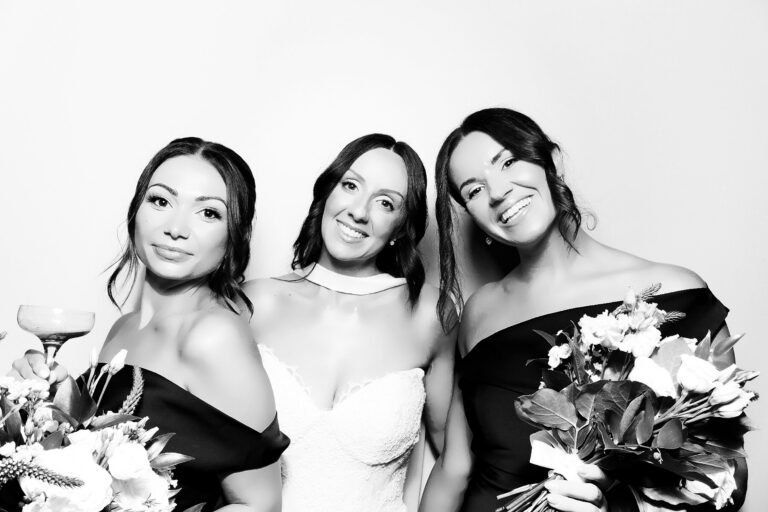
Not every photo booth produces the same result. Some are built around quick snapshots and novelty effects; others use professional camera equipment, considered lighting and an attended, portrait-led approach to create portraits guests will genuinely want to take home.

Ask to see full galleries from real weddings, rather than only a handful of carefully selected social posts. Look at a range of skin tones, evening lighting conditions, group sizes and ages. Are faces evenly lit? Do black outfits retain detail? Does the image still feel flattering when a group of six squeezes in? These details tell you far more about photographic quality than a list of specifications.
Lighting is particularly significant. A booth may be positioned in a beautiful candlelit reception room, but its own lighting needs to create a clean, flattering portrait without making guests look over-flashed or washed out. For a wedding, a soft, editorial finish will usually sit more comfortably alongside your professional wedding photography than harsh direct flash.
It is also worth considering the role the booth will play. If you want an alternative set of polished evening portraits, photography quality should lead the decision. If the aim is a lively, interactive focal point after the first dance, the guest journey and pace of use may matter just as much. The strongest suppliers can balance both.
What should you look for when hiring a wedding photo booth?
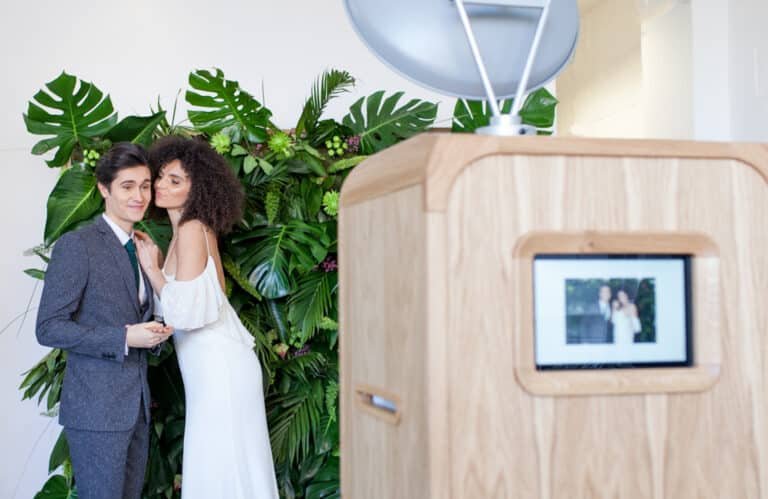
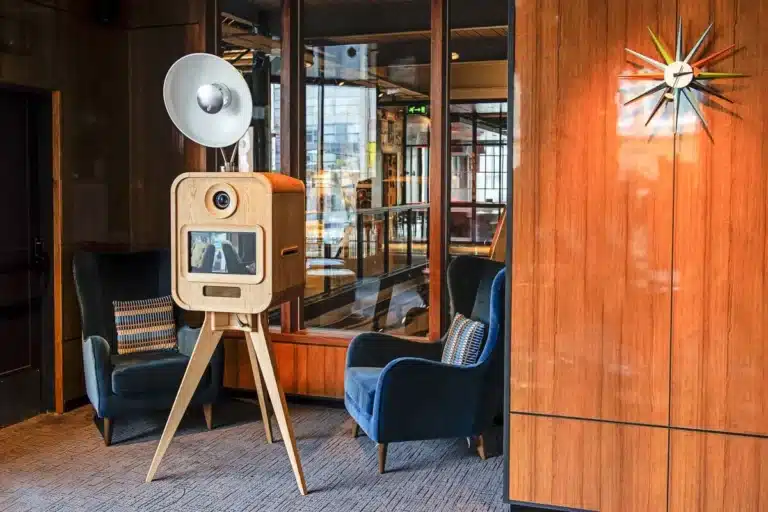
Begin with the physical presence of the booth. Your venue has likely been chosen for its architecture, tablescape or setting, so the booth should complement that work rather than interrupt it. A visible tangle of cables, a generic printed surround or a unit that looks at home in an arcade can change the feel of an otherwise carefully designed room.
Ask for photographs of the actual setup. MooMuu’s Luxury Oak and ICON offer attended colour photography with prints; Signature GLAM offers attended black-and-white portraits with prints. Digital Booth is a compact, self-service, print-free option. Compare the output and service model as well as the physical appearance.
The backdrop deserves more thought than it is often given. It occupies a large proportion of every image and should work with the booth, the venue and the wedding styling. A plain tonal backdrop can be more versatile than a busy pattern, particularly when guests are wearing bold colours or formal eveningwear. Equally, an installation-style backdrop can be worthwhile where it becomes part of the reception’s visual moment.
Do not overlook the print design either. A discreet monogram, wedding date or carefully chosen typeface can make a strip feel like a small keepsake. Too much text, clip art or competing colours can date it quickly. Request a proof before the event and judge it as you would a menu, place card or welcome sign.
Choose an experience, not just a machine
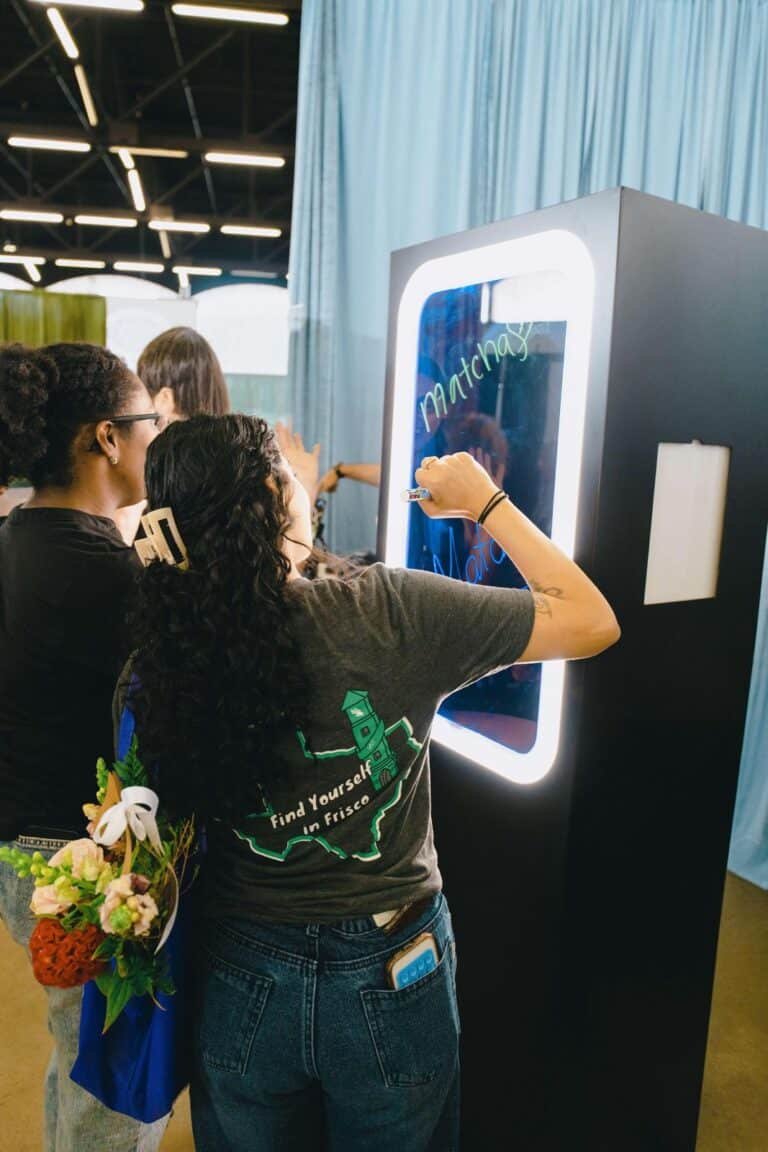
A good booth is as much about how people feel using it as the final image. Consider who will be invited. A wedding with a broad age range benefits from an intuitive experience with a clear screen, simple prompts and an attendant who is warm without being overbearing. Guests should understand what to do within a few seconds, even after a glass of champagne.
Think about how guests receive and enjoy their photographs: prints, a compatible guestbook option, animated captures or digital sharing. The available features depend on the chosen booth and package, so confirm them in the quote rather than assuming every option is included.
MooMuu does not supply props. Guests can enjoy relaxed portraits without accessories. If you plan to bring your own styling items, discuss their suitability and placement with us before the event.
Our Glam and colour-booth comparison explains the differences between MooMuu’s actual products. Choose by the photographic finish, support and venue requirements; a format name does not guarantee faster queues or more repeat visits.
Ask who is looking after it on the night
Staffing depends on the product. MooMuu’s Luxury Oak, ICON and Signature GLAM include an attendant during the agreed operating period. The Digital Booth is self-service and print-free, with delivery, installation, testing, collection and remote support; an attendant does not normally remain on site.
A professional attendant should be presentable, calm and proactive. They should welcome guests, encourage hesitant groups, keep the area tidy and resolve issues quietly. Their role is not to become the entertainment. It is to make the experience easy enough that it feels effortless to your guests.
Ask whether the person attending will stay for the full hired period, how they are briefed and whether they have worked at comparable weddings. It is reasonable to ask about backup equipment too, particularly where instant prints are a priority. Reliable delivery is largely invisible when it is done well, but it protects a part of the evening that cannot simply be recreated later.

Plan around the venue and the wedding timetable
A photo booth needs more than a spare corner. It needs enough room for the booth itself, the backdrop, a small queue and guests waiting for prints without blocking a bar, fire exit or main route through the room. The ideal footprint depends on the experience, so share a floor plan or venue photographs early in the planning process.
Confirm mains power, loading access and installation times with the venue. Luxury Oak equipment cannot be carried up or down stairs, so tell MooMuu about steps and any proposed lift or ramp route before booking. Access and setup arrangements must suit the selected experience.
Timing affects guest participation. Starting immediately after dinner can work well while everyone is still together, especially if the booth is near the bar or evening reception space. Starting later may create more animated content, but older relatives and day guests may have gone home. There is often a useful middle ground: open the experience once dinner has finished, then keep it running through the first part of the evening party.
If you are providing a guestbook, think about how it will be used. Guests need somewhere to place their print, write a note and briefly pause without holding up the next group. A well-managed guestbook becomes a lively record of the room, rather than a pile of duplicate prints left on a table.
Be clear about the finish and the practical details
Before booking, establish what is included in the hire period, whether travel, delivery and set-up are accounted for, and how prints and digital images will be provided afterwards. Clarify the number of prints per session, whether guests can take copies, and whether there is an online gallery for those who want to download their images.
It is sensible to confirm what happens if the venue schedule changes. Weddings rarely run exactly to the minute. Some flexibility can be helpful, but it should be agreed in advance rather than assumed. The same applies to outdoor plans: a booth can work wonderfully in a marquee or covered terrace, but weather protection, power and light levels need proper consideration.
Finally, pay attention to how the supplier communicates before the wedding. Clear questions, accurate visuals, straightforward timings and thoughtful advice are usually a good indication of how the event will be handled. At MooMuu Experiential, that early planning is treated as part of the guest experience, not administration around it.
The right wedding photo booth should never compete with the day you have planned. It should give guests an easy, well-presented reason to gather, laugh and leave with photographs that still feel good when you find them years later.
Compare the options for your wedding
Explore Luxury Oak, ICON, Signature GLAM and Digital Booth, then request help with your date and venue. Share your guest numbers, preferred operating hours and whether you want printed photographs, digital-only content or an experiential option.