
Wedding Reception Photo Booth Styling Example
A wedding reception photo booth styling example that shows how refined backdrops, lighting and print design create a polished guest experience for all.
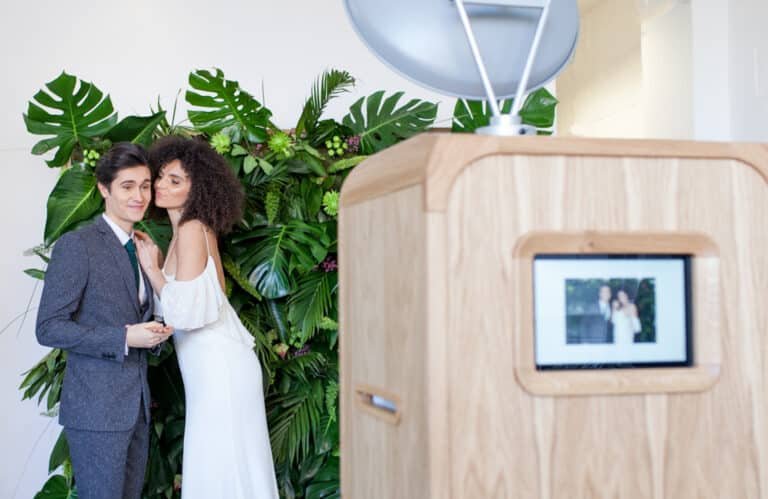
The difference between a photo booth guests use once and an installation they return to all evening is rarely the booth itself. It is the styling around it. This wedding reception photo booth styling example shows how a thoughtfully curated setting can become part of the room’s visual story – not an afterthought tucked beside the bar.
For a luxury wedding, the strongest photo booth designs feel as though they were always intended to be there. They echo the floral direction, the stationery, the lighting mood and the confidence of the venue. Guests see a beautiful moment worth stepping into, then leave with imagery that feels every bit as considered as the celebration itself.
A wedding reception photo booth styling example in practice
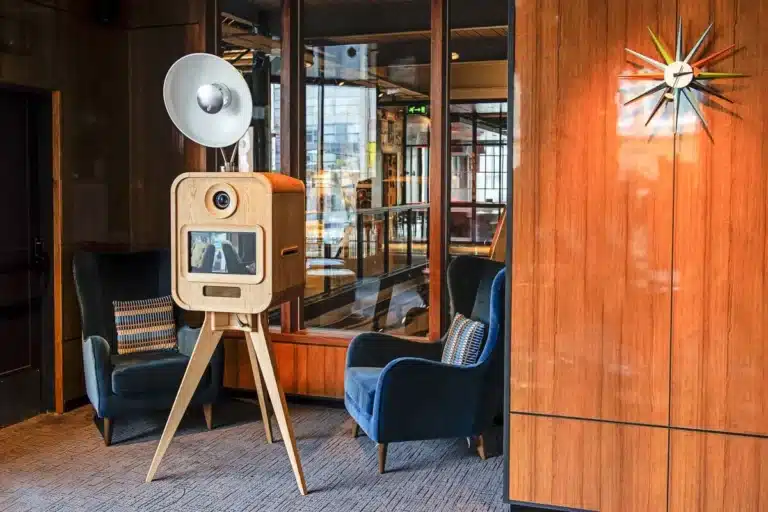
Picture a late-summer reception at a Cotswolds country estate. The dining room is dressed in soft stone, ivory linen and sculptural arrangements of garden roses, cosmos and trailing foliage. As dinner gives way to dancing, an oak-crafted photo booth sits within a dedicated portrait corner just beyond the main reception space.
Behind it, a warm ivory drape creates height and softness without competing with the architecture. A restrained floral meadow grows from one side of the backdrop, using the same stems and tonal palette as the tablescapes. Two statement lamps cast a flattering, ambient glow around the installation, while the booth’s professional lighting takes care of the portraits themselves.
The result is not a themed corner or a visual interruption. It is a refined after-dark extension of the wedding design. From across the room, it has presence. Up close, it gives guests a reason to gather, pose and create something genuinely lovely.
The photo template follows the same approach. A delicate border in soft taupe frames each image, with the couple’s names set in the typeface used on the menus and place cards. The date appears discreetly below. Nothing is overworked. The design leaves room for the photographs, the guests and the joy of the moment.
Start with the room, not the booth
A beautifully designed booth can still feel disconnected if it arrives without context. Before selecting a backdrop or print template, look carefully at the reception room. Consider its materials, its scale and the atmosphere you want after dark.
A grand manor dining room might call for a clean, editorial portrait set-up with black-and-white imagery and a sculptural plinth. A contemporary boutique hotel can carry a mirrored or monochrome installation with a sharper graphic edge. In a high-end barn, oak finishes, draped fabric, candlelit tones and meadow-inspired florals can feel particularly at home.
The key is not to match every detail exactly. Literal matching can appear overly arranged. Instead, choose two or three visual threads to repeat: perhaps the flower palette, the main stationery typeface and one prominent finish such as brushed gold, soft black or natural oak. This creates cohesion while allowing the photo booth to retain its own sense of occasion.
Think about sightlines and scale
Placement changes the experience. A booth hidden in an unused corridor may technically be available, but it will not become part of the celebration. Position it where guests naturally move between the dining room, bar and dance floor, while giving it enough breathing room to be photographed and enjoyed.
Avoid placing the installation directly beside competing focal points. A cake table, live band entrance or packed drinks station can make the area feel congested. Instead, give the booth its own visual boundary: a drape, a backdrop, a floral frame or simply a considered amount of open space.
Scale matters too. At a grand venue, a small backdrop can disappear. At an intimate reception, an oversized installation may dominate the room. The most polished designs feel proportionate to both the setting and guest count.
Build the styling in layers
The most successful installations usually rely on layers rather than one oversized decorative gesture. Begin with the backdrop, which establishes the overall tone. Then introduce texture, lighting and a small number of meaningful details.
For the example above, the ivory drape softens the room and gives the portraits a clean, flattering setting. Florals add depth and connect the booth to the wider wedding scheme. The lamps make the installation feel welcoming in person, while the booth lighting preserves crisp, high-quality imagery regardless of changing evening conditions.
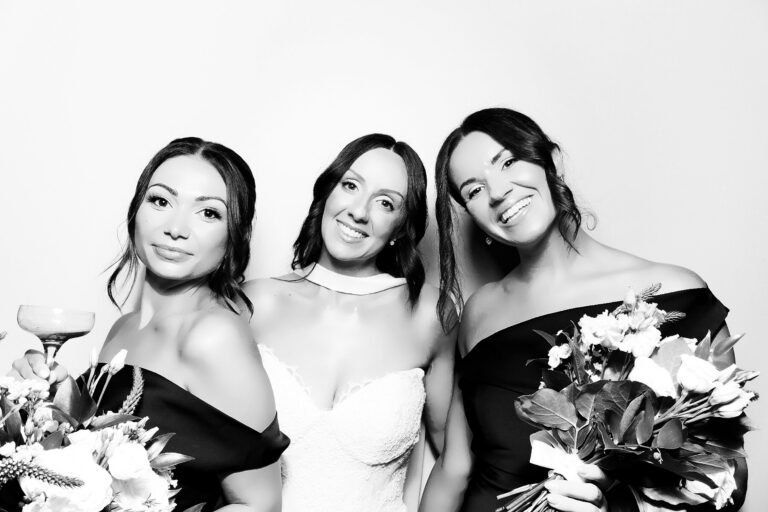
A simple design can be just as effective. A black-and-white Glam experience against a clean white backdrop, with a single chrome plinth and contemporary bud vases, delivers a confident editorial look. It suits couples who want immaculate portraits and a little red-carpet energy without introducing a second decorative theme.
If your wedding already has abundant florals, it may be wiser to hold back on additional arrangements around the booth. In that setting, a fabric backdrop or a clean architectural structure can offer contrast. Conversely, where a reception room is minimal, the photo booth installation can provide the texture and visual warmth that brings a quieter space to life.
Choose a guest experience that suits the celebration
Styling is not only visual. It shapes how guests interact with the installation. A Retro booth, for example, brings a tactile, sociable rhythm to the evening. Guests step inside together, close the curtain and emerge with a strip of images that feels personal and immediate. It works beautifully for receptions with a lively, intimate energy.
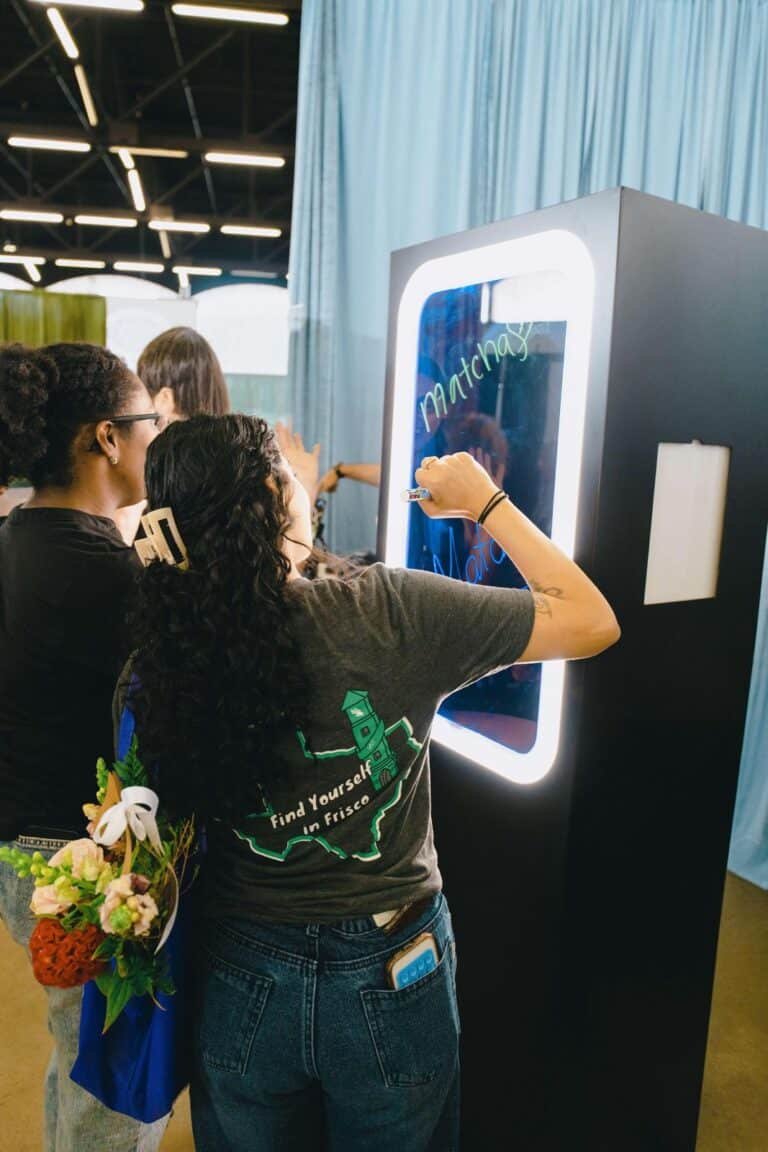
A Digital or ICON booth is more open and can support a broader portrait moment, particularly when the backdrop is a statement in its own right. It encourages group shots, spontaneous reunions and plenty of movement throughout the evening. This is often ideal for larger guest lists or receptions where the booth needs to be visible and inviting from a distance.
For couples drawn to a fashion-led finish, a Glam black-and-white experience offers a different kind of luxury. The focus is on luminous skin, polished monochrome portraits and a pared-back setting. The trade-off is intentional: a cleaner visual language gives photographs a more editorial quality, but it asks the rest of the styling to be equally disciplined.
MooMuu Experiential approaches each option as an installation rather than a piece of entertainment equipment. That distinction is felt in the materials, the guest journey and the final images guests take home or share.
Let print and digital design carry the wedding identity
The template is where the booth becomes unmistakably yours. It should relate to the wedding stationery without attempting to reproduce an entire invitation suite in miniature. A small monogram, a well-chosen typeface and a restrained colour accent are often enough.
For printed strips, think about how they will look on a fridge, in a frame or tucked inside a thank-you card months later. A classic layout with generous white space has longevity. For digital sharing, consider whether the design will still feel refined when it appears in a guest’s camera roll alongside candid photographs from the evening.
Names and dates are traditional, but they are not the only option. A short phrase with personal meaning can work, provided it is concise and visually calm. If the wedding has a weekend identity or a house-party atmosphere, a discreet location line may add character. The best choice depends on how formal the celebration feels and whether you want the imagery to read as timeless or distinctly of the moment.
Protect the atmosphere after dark
Reception lighting changes quickly. The room may begin with candlelight and soft uplighters, then move into a more energetic dance-floor mood. A photo booth should remain flattering and easy to use throughout, without flooding the room with harsh light.
This is why professional photo lighting and an experienced installation team matter. Guests should be able to step in, understand what to do and receive polished images without the styling losing its magic once daylight fades. Cables, spare stock and operational details should remain discreet, leaving the visible experience calm and considered.
It is also worth agreeing the timing with your planner, venue and florist. If flowers are being repurposed from the ceremony, the booth can be styled during the room turn. If the installation is a statement feature from the outset, it may need to be in place before guests enter for drinks. These details determine whether the finished corner feels effortless or hurried.
A final styling decision worth making early
The photo booth is often booked as entertainment, then styled at the end of the planning process. For a wedding where every detail has been curated, reverse that order. Decide early what role it should play: an elegant portrait studio, a playful late-night destination, or a design-led focal point that guests will photograph almost as much as they use.
Once that role is clear, the backdrop, booth format, florals, lighting and template become far easier to choose. The most memorable reception installations do not simply produce photographs. They give guests a beautiful place to be together, and leave the wedding with a lasting impression long after the last dance.