
AI Sketch Experience for Conferences
An ai sketch experience for conferences adds live, shareable artwork, refined guest engagement and a premium focal point for modern events.
Conference guests know the difference between filler and a feature. They can spot a forgettable activation within seconds. An AI sketch experience for conferences works because it feels personal, visual and immediate – not another branded distraction, but a live installation that turns attendees into part of the event itself.
For organisers under pressure to create something polished, interactive and genuinely memorable, that distinction matters. The right experience does more than entertain people between sessions. It draws attention on the show floor, creates a natural talking point, and gives guests a bespoke keepsake that feels considered rather than generic.
Why an AI sketch experience for conferences works
Conferences can be difficult environments for guest engagement. Schedules are tight, attention is divided, and every brand is competing for the same few moments of curiosity. That is exactly why visual, live-response activations perform so well. They offer an immediate payoff without demanding too much time.
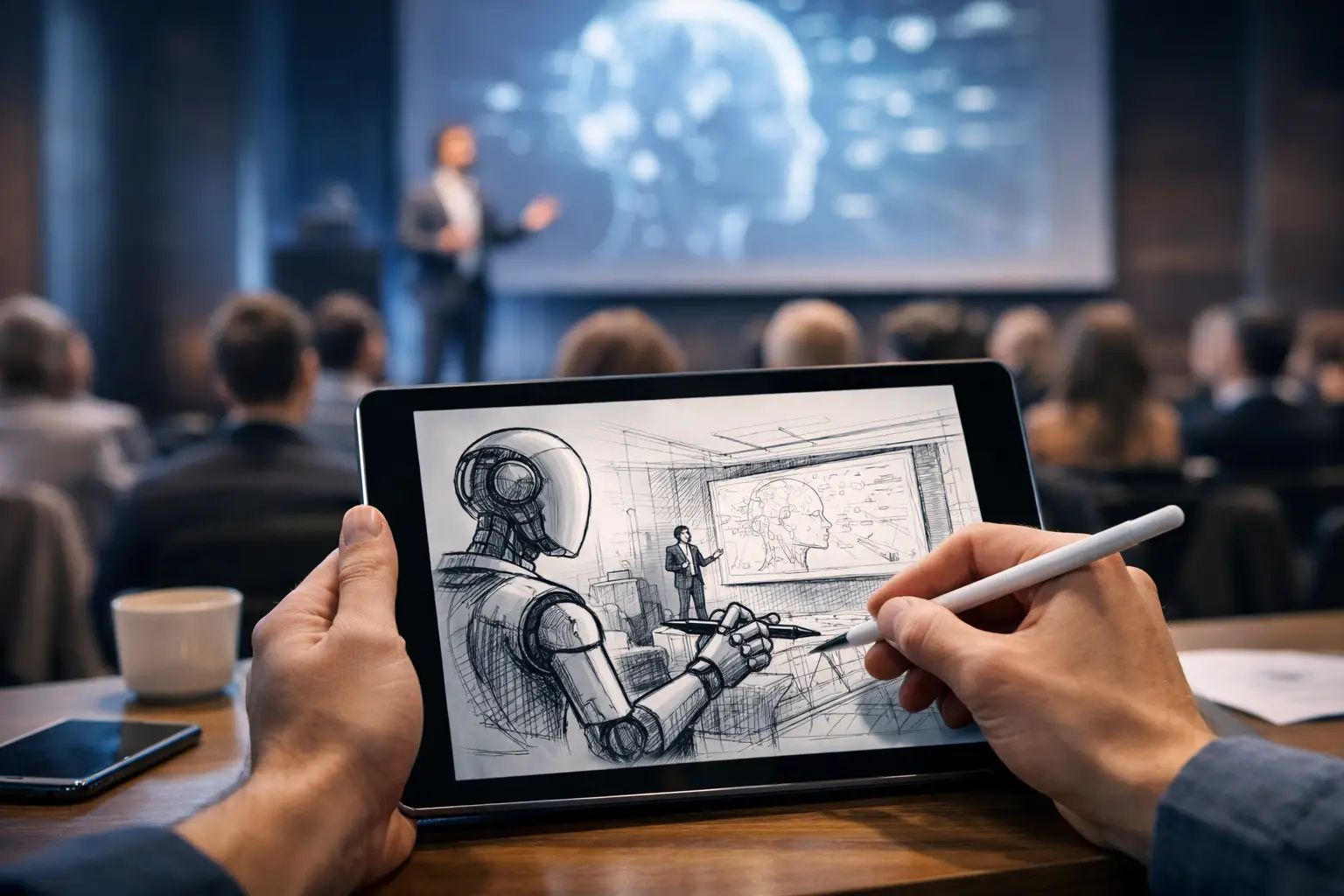
An AI sketch experience for conferences takes a familiar guest behaviour – stepping up for a photo – and transforms it into something more elevated. Instead of receiving a standard image, attendees watch themselves reimagined as stylised artwork. The effect is playful, but the presentation can feel distinctly premium when the installation, artwork style and event branding are all thoughtfully curated.
There is also a practical advantage. Conferences often need experiences that appeal across age groups, industries and levels of confidence. Not everyone wants to dance in front of a camera or take part in something overtly theatrical. A sketch experience feels accessible. Guests simply sit or stand for a moment, the AI creates the piece, and the result becomes a conversation starter.
The guest journey matters as much as the technology
The strongest conference activations are not driven by novelty alone. They work because the guest journey is smooth, visually coherent and easy to understand from a distance. If people have to work out what is happening, many will keep walking.
A well-executed AI sketch installation begins with presence. It should look like part of the event design, not a piece of equipment dropped into a corner. Refined styling, considered signage and a clean setup immediately signal quality. That first impression is especially important at corporate events where brand standards are high and every touchpoint reflects on the organiser.
From there, the interaction should feel effortless. Guests approach, take part in a short capture, and then see their sketch generated in moments. That real-time transformation is where the magic sits. It creates a small crowd, prompts reactions and gives passers-by a reason to stop. At a busy conference, that live visual moment can be more powerful than a static display.
The final stage is equally important. Whether the artwork is shared digitally, printed, or incorporated into a wider branded experience, the outcome needs to feel polished. If the sketch itself is beautiful and on-brand, guests are far more likely to keep it, share it and associate that quality with the event.
More than entertainment – a brand asset in real time
The phrase “guest engagement” can be overused in event planning, but conferences genuinely require activations that do more than look attractive. Marketing teams want dwell time. Exhibitors want visibility. Event organisers want atmosphere without sacrificing professionalism. An AI sketch experience meets all three when handled properly.
For exhibitors, it creates a reason for attendees to pause at the stand without the hard sell feeling forced. People are naturally drawn to live creation, particularly when they can become the subject. That makes the installation useful not only as entertainment but as an elegant lead-in to conversation.
For conference organisers, it helps shape the overall feel of the event. A strong activation can soften the transactional tone of a business-heavy day and make networking feel more relaxed. Guests who have just received a personalised sketch often stay in the area longer, talk to colleagues about the experience and post the result to their social channels. That ripple effect is valuable.
For brands, the artwork itself becomes part of the content strategy. If branded carefully, each sketch extends the event identity beyond the venue. The balance here is important. Over-brand it and the piece feels promotional. Under-brand it and the event loses the visibility benefit. The most successful executions build branding into the experience with restraint and confidence.
Where this experience fits best at a conference
Not every conference layout is the same, and placement has a direct effect on performance. An AI sketch experience tends to work particularly well in areas where guests naturally have a little breathing space. Reception zones, sponsor lounges, exhibition areas and evening networking spaces are often ideal because attendees are more open to interaction there than between tightly scheduled keynote sessions.
It can also be highly effective as part of a larger hospitality environment. At a leadership summit or premium client event, for example, the sketch station can become a refined focal point rather than a high-volume attraction. In that setting, the emphasis is less on throughput and more on elegance, quality and the sense that guests are being offered something thoughtfully selected.
That said, scale matters. A large trade conference may need an activation designed to handle fast footfall and visible crowd interest. A smaller executive event may benefit from a quieter, more editorial presentation. The core technology can suit both, but the styling, staffing and guest flow need to match the brief.
What makes it feel premium rather than gimmicky
This is where conference organisers need to be selective. AI by itself is not impressive anymore. Presentation is what determines whether an activation feels current and design-led or simply trend-led.
The visual output has to be strong. If the sketch style feels crude or inconsistent, the experience loses impact quickly. Guests expect something worth keeping, especially at a prestigious event. The best artwork styles are distinctive enough to feel special, while still flattering and recognisable.
The physical setup matters just as much. Finishes, materials and spatial design influence how the installation is perceived before anyone uses it. A refined footprint, elegant display and calm, professional hosting elevate the entire interaction. This is particularly important for luxury-facing brands, premium conferences and events where aesthetics have already been carefully controlled.
Then there is pacing. Some activations fail because they feel rushed or transactional. A premium sketch experience should still be efficient, but never abrupt. Guests should feel hosted, not processed. That subtle difference has a huge effect on how the experience is remembered.
The trade-offs organisers should consider
As with any live installation, success depends on context. An AI sketch experience is brilliant for creating a visual moment and personalised takeaway, but it is not the right answer for every objective. If a conference is focused entirely on data capture at volume, a different format may support that aim more directly. If the brief is to create a more memorable atmosphere, build social sharing and leave guests with something bespoke, it is far better suited.
There is also the question of audience behaviour. Creative, design-conscious and brand-led events often respond especially well because guests are already attuned to presentation. More formal sectors can still embrace the concept, but the execution may need to be more restrained. Style selection, booth design and branding all need to align with the tone of the conference.
Operationally, the strongest results come from planning the experience into the event rather than treating it as an add-on. Power, positioning, queue management, surrounding décor and the intended volume of guests should all be considered early. The activation may look effortless on the day, but that polished finish is always the result of careful production.
Why the best conference experiences are the ones people talk about afterwards
A conference can have an impressive speaker line-up, a striking venue and flawless catering, yet still blur into the wider event calendar. What tends to stand out are the moments people can picture afterwards. The installation they gathered around. The piece they showed to colleagues. The part of the day that felt fresh rather than expected.
That is where an AI sketch experience for conferences earns its place. It creates an interaction with visual theatre, but it also leaves guests with something personal. Not a throwaway freebie, and not a fleeting digital effect, but a stylised reflection of their presence at the event.
For brands and organisers who care about aesthetics, guest perception and lasting impression, that combination is especially compelling. When beautifully delivered, it becomes more than an attraction. It becomes part of the event identity.
At MooMuu Experiential, that is the standard that matters most – technology presented with taste, and guest experiences designed to feel unmistakably premium. If your conference needs a feature people genuinely want to engage with, choose something that looks as considered as the rest of the room.