
9 Best Interactive Event Activations for Brands
Discover the best interactive event activations for brands, from AI art to luxury photo moments, designed to boost engagement and leave a lasting mark.
When a guest stops mid-conversation, reaches for their mobile phone, and says, “You need to see this,” you know the activation is doing its job. The best interactive event activations for brands create that exact moment – the point where attention turns into participation, and participation turns into beautifully shareable content.
For luxury-facing brands, high-profile corporate events and polished public activations, interactivity needs more than novelty. It has to look exceptional, feel intuitive, and reflect the standards of the brand behind it. A brilliant activation is not simply busy. It is considered. It draws people in, gives them something worth engaging with, and leaves them with an output that feels elevated rather than disposable.
What makes the best interactive event activations for brands work
The strongest activations combine three things: visual pull, a clear guest journey, and an outcome people genuinely want to keep or share. If one of those is missing, the experience can feel flat. A striking installation may attract a crowd, but if the interaction is clumsy, guests drift away. Equally, a clever piece of technology may impress an event team, yet fail to land if the result is underwhelming.
There is also a brand question to answer. Not every activation suits every setting. A product launch may need pace and social visibility. An awards evening may call for refined, editorial content. A public-facing campaign might prioritise queue flow and high throughput, while an executive event may value intimacy and finish above volume. The best choice depends on what success looks like for your event.
1. Design-led photo booths that feel like part of the event
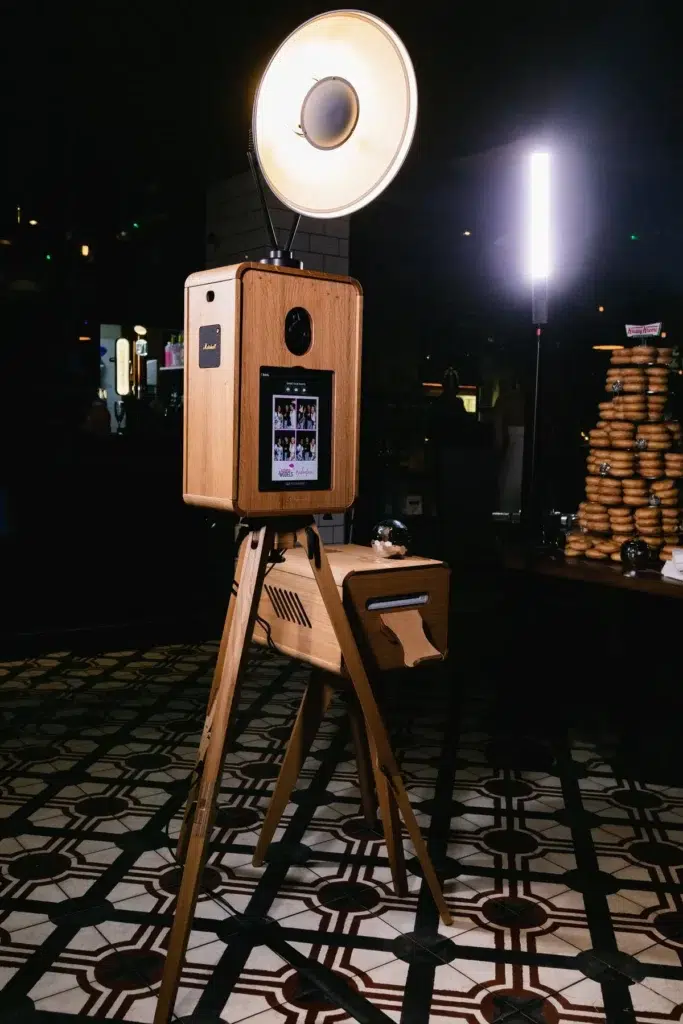
A premium photo booth remains one of the most reliable ways to generate engagement, but only when it has been properly curated. The best versions are not tucked into a corner as an afterthought. They are styled as part of the room, with considered backdrops, flattering lighting, elegant props, and imagery guests are genuinely pleased to post.
For brands, this works because the interaction is familiar, low-friction, and highly repeatable. Guests understand it instantly. They step in, capture polished imagery, and leave with content that carries the event aesthetic into their own channels. It is especially effective for launches, hospitality events, and corporate celebrations where branded visibility matters, but the finish still needs to feel refined.
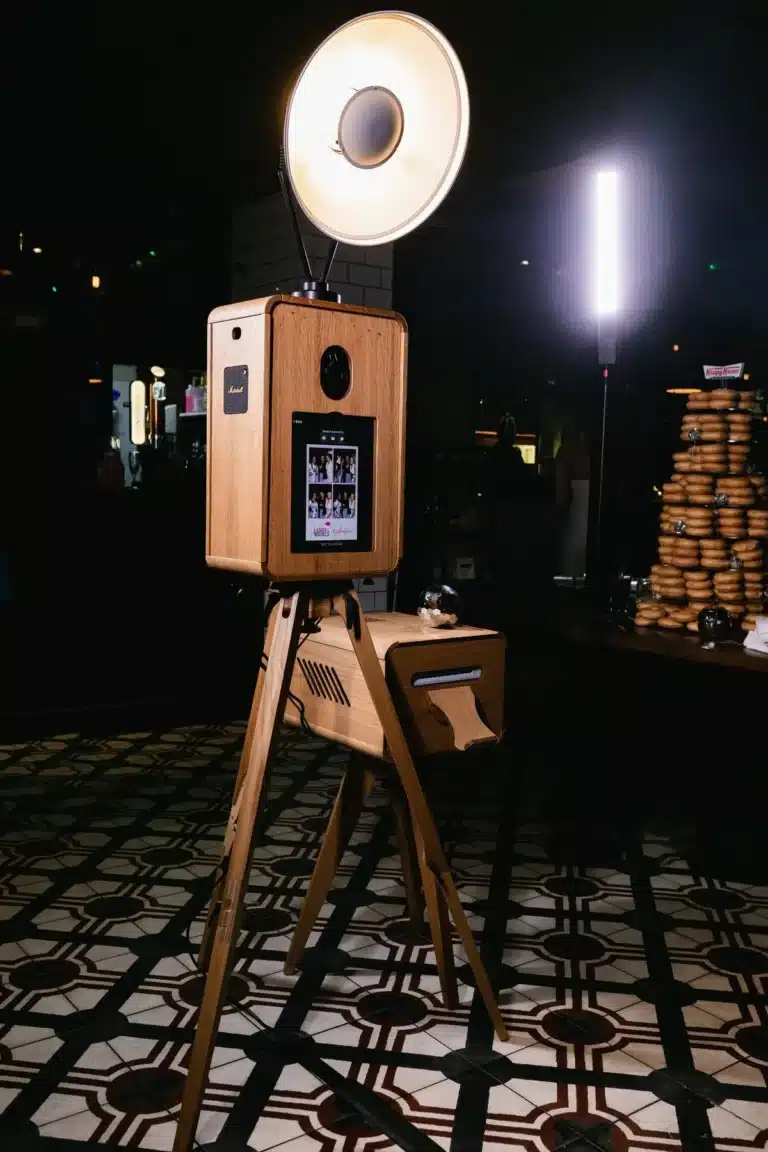
Different booth styles also serve different briefs. A sleek digital setup suits contemporary brand environments, while a retro-inspired booth can add warmth and character. Black-and-white glamour photography offers a more editorial result, which is ideal for events where the audience expects a luxury finish rather than overtly playful output.
2. AI sketch experiences with a premium keepsake
AI sketch activations have a rare advantage: they combine theatre with personalisation. Guests sit for a portrait, watch the process unfold, and receive a stylised artwork that feels bespoke. That sense of creation happening in real time gives the installation a natural crowd. People do not simply collect an output – they watch one being made.
For brands, this format works particularly well when you want a more conversational pace. It invites attention without demanding noise. It also leaves guests with something more distinctive than a standard giveaway. The perceived value is higher because the result feels personalised, design-led, and worthy of keeping.
The trade-off is throughput. A sketch-based experience is often slower than a quick photo interaction, so it suits events where quality and memorability matter more than processing the largest possible number of guests in a short window.
3. Live mosaic walls that build momentum throughout the event
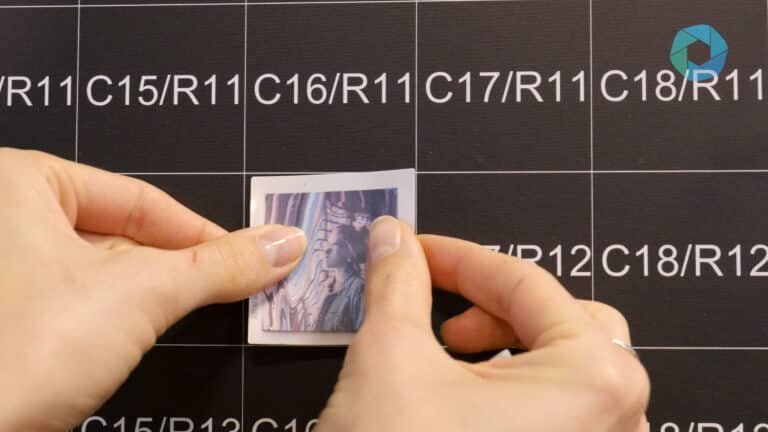
Some activations are at their best not in a single moment, but over time. A live mosaic wall is a strong example. Individual guest photos are captured during the event and gradually assembled into one larger branded image. Early guests enjoy being part of the process, while later guests see the full installation taking shape and feel drawn in.
This is particularly effective for conferences, awards nights, internal celebrations, and milestone events where collective participation supports the message. It creates a visual story of attendance. More importantly, it turns hundreds of individual interactions into one final reveal.
From a brand perspective, the appeal lies in both scale and symbolism. A mosaic wall can represent community, growth, collaboration, or campaign storytelling without feeling heavy-handed. It gives organisers a focal point that evolves naturally as the room fills.
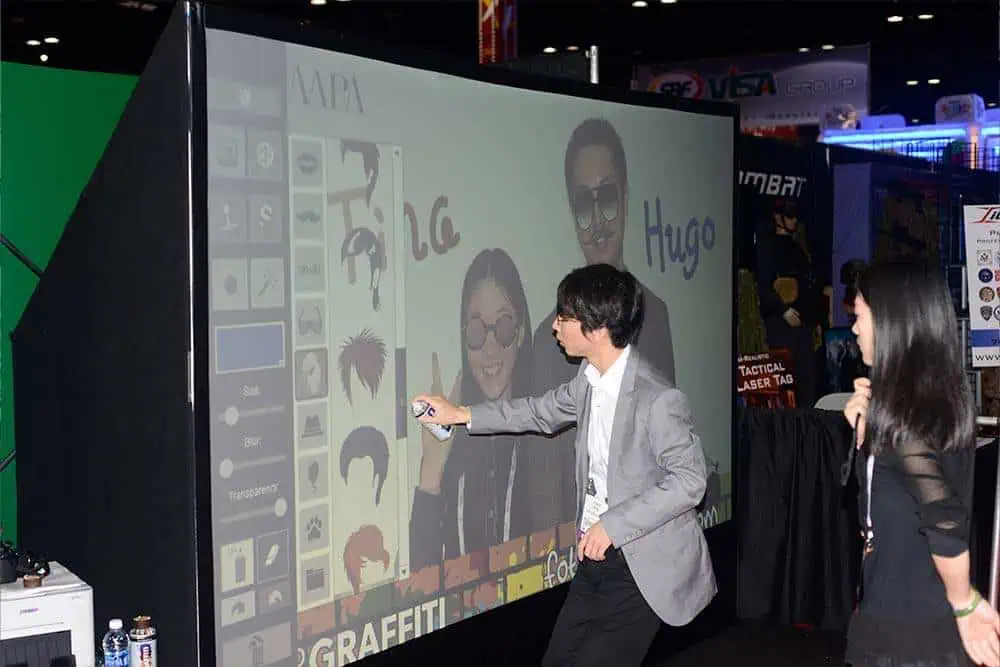
4. AI graffiti walls for a more expressive guest journey
An AI graffiti wall offers a different energy. It invites guests to create something bold, visual, and slightly unexpected, while still keeping the output polished. For brands that want to signal creativity and innovation, it can be a compelling centrepiece.
This type of activation works best when the event audience is open to expression and spectacle. Think brand launches, fashion-led parties, experiential campaigns, and creative-industry gatherings. The appeal is not only the finished artwork, but the invitation to participate in making it.
As with any highly visual installation, styling matters. The technology may be advanced, but the presentation still needs to align with the wider event design. If the finish feels disconnected from the environment, the activation can look gimmicky. When handled properly, it feels modern, immersive, and unmistakably premium.
5. Glamour portrait stations for editorial brand imagery
Not every interactive activation needs to feel overtly technological. Sometimes the most effective brand experience is one that makes guests look exceptional. Editorial portrait stations, especially those with studio-quality lighting and a clean visual treatment, consistently perform well because the output feels aspirational.
This is where luxury matters. Guests can tell the difference between a hurried event snap and a portrait that has been carefully lit and art directed. For brand events, that distinction matters because the image becomes part of the guest’s own public narrative. If they love how they look, they share it. If they do not, the interaction ends at the event.
For audiences that value aesthetics – from corporate hosts entertaining senior stakeholders to premium consumer brands courting content-savvy attendees – this format delivers beautifully.
6. Personalised digital content stations
When the objective includes social reach, personalised digital content remains a strong performer. This could mean branded animations, custom overlays, event-specific templates, or dynamic outputs tailored to the campaign. The key is subtlety. Guests want content that reflects the event, not content overwhelmed by branding.
The best executions feel tailored and considered. They give the guest something stylish enough to post while still carrying visual cues from the brand. This balance is where many activations either succeed or fail. Too little brand presence and the campaign value gets diluted. Too much, and the content feels promotional rather than desirable.
7. Interactive installations with a visible queue appeal
Some activations succeed because they attract participation from a distance. People see others engaging, hear reactions, and want to know what is happening. Visible queue appeal matters, particularly in large venues where you need to draw footfall from across the room.
Installations with movement, live creation, or a reveal moment are especially effective here. They function almost like performance pieces while still delivering one-to-one interaction. For exhibition stands, public activations, and busy corporate events, that ability to stop passers-by is commercially valuable.
That said, popularity can create its own problem. If queues become too long or poorly managed, the experience starts to feel inaccessible. The most successful activations are designed not just for attention, but for smooth flow.
8. Branded keepsake experiences with genuine staying power
There is a difference between an event giveaway and an event keepsake. The best interactive activations give guests something they want to display, save, or revisit. That might be a printed portrait, a piece of generated artwork, or a contribution to a larger installation they later photograph and share.
For brands, this matters because memory is physical as well as digital. A keepsake extends the life of the event in a more intimate way. It sits on a desk, goes home in a gift bag, or reappears in a later social post. The interaction lasts beyond the room.
9. Bespoke hybrid activations tailored to the brief
Often, the most effective answer is not one activation but a combination. A design-led photo experience can work alongside a live mosaic wall. An AI-led art installation may pair beautifully with editorial portraiture. When the audience is mixed, a hybrid approach allows different guests to engage in different ways without diluting the overall look and feel.
This is particularly relevant for prestigious brand events where every touchpoint needs to feel cohesive. The activation should not look hired in. It should feel commissioned for the occasion. Thoughtful styling, premium materials, and a guest journey that makes sense within the space are what elevate the result.
How to choose the right activation for your brand
The starting point is not the technology. It is the outcome. If your priority is social sharing, choose an activation with fast, high-quality outputs. If you want a statement installation, focus on scale and visual presence. If the goal is guest experience at a luxury event, put finish and personalisation first.
It is also worth considering your audience honestly. A fashion-forward guest list may embrace something expressive and image-led. A corporate audience may respond better to polished portraiture or elegant AI-generated keepsakes. The venue matters too. Country estates, premium hotels, gallery spaces, and exhibition halls all ask different things of an installation.
At the premium end of the market, details decide whether an activation feels exceptional or merely functional. Styling, lighting, material choices, staffing, pacing, and the quality of the final output all shape perception. That is why the most memorable experiences are usually those that have been curated with the same care as the rest of the event.
For brands that want something unmistakably polished, the best activation is the one that guests remember for how it made them feel – included, impressed, and part of something worth talking about long after the room has emptied.