
The Future of Luxury Event Entertainment
The future of luxury event entertainment is design-led, interactive and polished – where technology, aesthetics and guest experience work beautifully.
A champagne tower may still draw the eye, but it no longer guarantees attention for the whole evening. At a luxury wedding or prestigious brand event, guests expect more than a beautiful setting – they expect moments worth stepping into, sharing and remembering. That is exactly where the future of luxury event entertainment is heading: away from passive spectacle and towards refined, interactive experiences that feel as considered as the tablescape.
For years, entertainment sat in its own category. There was the music, perhaps a dancefloor, perhaps a photo booth tucked in a corner. Now, the most successful events treat entertainment as part of the event design itself. It has to look right in the room, suit the tone of the guest list and produce something lasting, whether that is exceptional imagery, personalised artwork or a talking point that continues well after the last glass is cleared.
What the future of luxury event entertainment really looks like
The clearest shift is this: luxury entertainment is becoming more immersive, more design-conscious and more content-aware. Guests are no longer impressed by novelty alone. They want interaction with substance, and hosts want every detail to feel intentional.
At the top end of the market, that means installations rather than add-ons. A beautifully crafted booth with studio-quality imagery feels very different from standard event hardware. A live mosaic wall that evolves throughout the evening becomes part of the atmosphere. An AI-powered sketch or graffiti activation is not there simply to fill time – it becomes a bespoke expression of the event itself.
This matters because luxury is rarely about excess for its own sake. It is about curation. The entertainment that feels current, and will continue to feel current, is the kind that complements the visual language of the event while giving guests something personal to take away.
Aesthetics will matter as much as interaction
One of the biggest mistakes in event planning is treating entertainment as separate from styling. In premium spaces – country estates, private members’ clubs, design-led venues and polished corporate settings – visual discord stands out immediately. If an installation looks generic, it weakens the room.
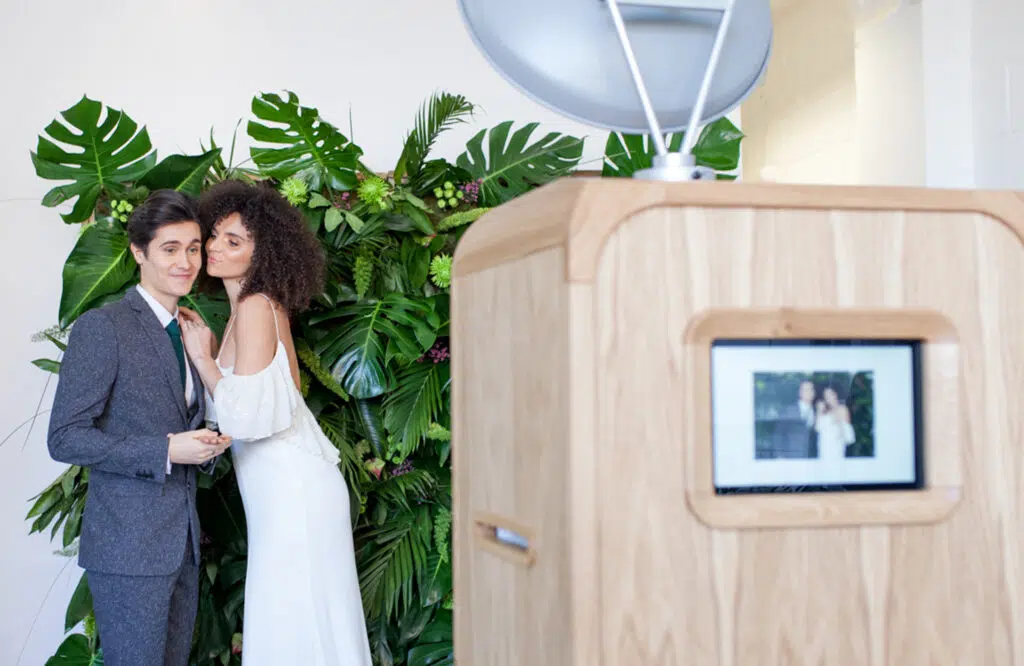
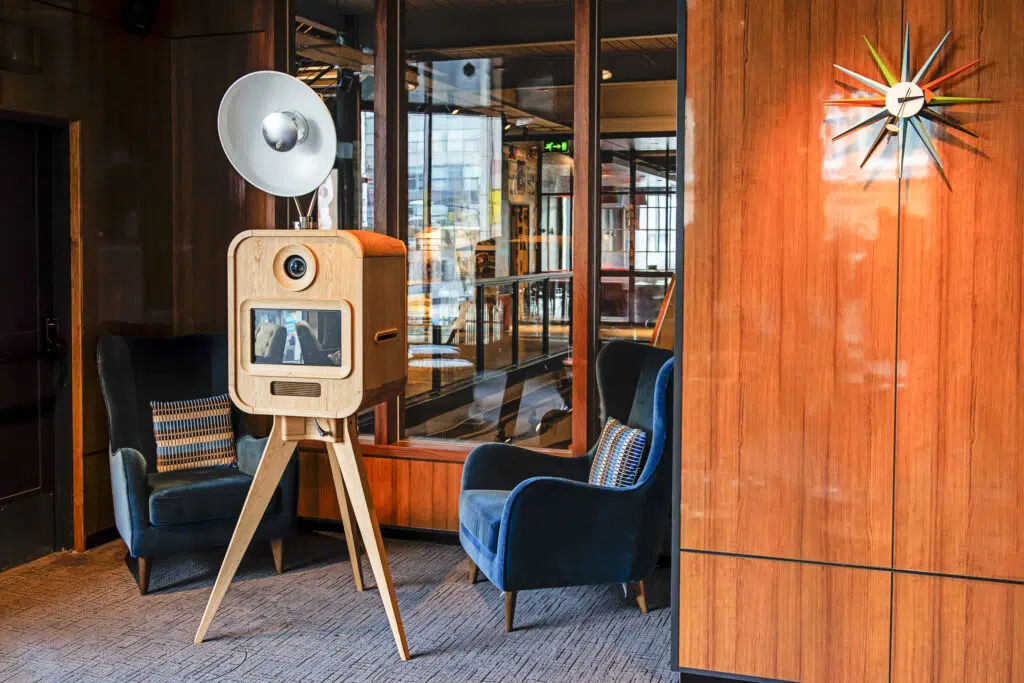
The future of luxury event entertainment will be led by pieces that are as visually resolved as the floristry, stationery and lighting plan. Materials, finish, scale and placement all matter. An oak-crafted photo booth, editorial black-and-white photography, elegant prop styling or a clean digital interface can elevate the guest journey before a single image is taken.
This is particularly relevant for weddings, where couples are increasingly sensitive to cohesion. It is equally relevant for corporate hosts, where every touchpoint reflects brand standards. The entertainment cannot feel bolted on. It needs to belong.
That does create a trade-off. The more design-led an installation becomes, the more important pre-event planning is. Backdrop choice, template design, positioning and guest flow all need proper consideration. But that extra thought is precisely what separates a premium experience from a forgettable one.
Technology will be visible, but never the point
There is no question that AI, live rendering and interactive digital experiences will shape the next phase of high-end events. The mistake is to assume guests are interested in technology for its own sake. They are not. They care about what it creates for them.
That distinction is important. The future of luxury event entertainment is not about filling a room with screens or introducing gimmicks under the banner of innovation. It is about using technology to deliver something immediate, personalised and visually exceptional.
An AI Sketch Bot, for example, works because it combines theatre with keepsake value. Guests see the process happen, enjoy the anticipation and leave with something distinctive. An AI Graffiti Wall succeeds when it turns participation into polished visual output that still feels aligned with the event’s style. A digital booth feels relevant when the imagery is genuinely flattering, fast to receive and beautifully branded.
The benchmark will be elegance. The technology should feel intuitive and expertly delivered, not noisy or over-explained. In luxury settings, confidence is quiet.
Guests want participation, not pressure
Another shift is behavioural. Modern guests do want to engage, but they do not want to be pushed into awkward participation. Forced icebreakers and overbearing entertainment styles can feel out of place in a refined environment.
The stronger model is invitation rather than interruption. Installations should draw people in naturally. A glam black-and-white booth does this because it offers a polished, editorial result people actively want. A mosaic wall encourages repeat engagement because guests enjoy seeing the bigger picture build. Interactive activations work best when they are easy to approach, rewarding to use and visually compelling from across the room.
This is where luxury events have become more sophisticated. Entertainment is less about commanding the room and more about creating elegant moments within it. Some guests will spend ten minutes immersed in an activation. Others will pass through once and treasure the outcome. Both interactions should feel equally valid.
Content creation is now part of the brief
For corporate events especially, entertainment is increasingly expected to do more than entertain. It should generate assets, extend reach and encourage organic sharing without making the event feel transactional.
That is reshaping the future of luxury event entertainment in a very practical way. Brand managers and event agencies are looking for experiences that produce high-quality content in real time – stills, branded visuals, user-generated moments and interactive outputs that have value beyond the venue. The same principle now applies to weddings too, albeit with a more personal emphasis. Couples want imagery their guests love enough to keep, post and talk about.
This does not mean every installation needs to scream social media. In fact, the most elevated experiences tend to be subtle. If the aesthetic is strong and the result is desirable, guests will share it naturally. What matters is quality control. Lighting, framing, print finish, digital delivery and branding all need to be considered properly.
There is also a balance to strike. Not every event should feel optimised for online performance. Some hosts want intimacy over visibility. Others want broad exposure. The best entertainment concepts can flex in either direction while maintaining the same premium standard.
Personalisation will become more refined
Personalisation has long been associated with names, monograms and custom signage. That still has its place, but the next evolution is more thoughtful. Guests increasingly notice when an experience feels specifically designed for that event, not merely stamped with the client’s identity.
For weddings, that could mean booth templates and styling that echo the invitation suite, colour palette or venue architecture. For brands, it may mean activations that reflect campaign language, product launches or audience preferences without feeling heavy-handed. The result should feel bespoke in the true sense of the word.
This is one area where technology and creative direction meet beautifully. Done well, personalisation allows entertainment to feel intimate at a private celebration and strategically aligned at a corporate event. Done badly, it can feel overly branded or visually cluttered. Taste remains the deciding factor.
Service will become part of the luxury experience
As expectations rise, the delivery around the entertainment matters just as much as the installation itself. Luxury clients are not simply booking an attraction. They are buying confidence.
That includes pre-event consultation, clear creative guidance, punctual setup, thoughtful on-site presence and a finish that feels immaculate from first glance to final interaction. The future of luxury event entertainment will belong to providers who understand that production standards are part of the product.
This is especially true at complex events where timings are tight, spaces are styled to a high level and multiple suppliers are working in tandem. Entertainment must arrive ready to enhance the occasion, not compete with it. For that reason, design-led specialists such as MooMuu Experiential are increasingly valued not just for what they install, but for how effortlessly it is woven into the broader event vision.
Why this shift is only becoming more pronounced
Luxury audiences are visually literate. They travel well, attend exceptional events and notice quality immediately. Their benchmark has changed. A pleasant extra is no longer enough; entertainment has to earn its place in the room.
At the same time, hosts have become more selective. They want fewer generic features and more meaningful focal points. They want moments that feel current without being disposable, interactive without being chaotic and polished enough to sit comfortably within a beautifully designed environment.
That is why the future of luxury event entertainment will not be defined by louder ideas, but by better ones. Experiences that combine aesthetic discipline, genuine interaction and memorable output will continue to lead. The events people talk about most warmly are rarely the ones with the most going on. They are the ones where every element felt considered, and where the entertainment left guests with something they genuinely wanted to keep.
The most exciting part is that this future is not distant. It is already taking shape in the best weddings, private parties and corporate events across the UK. The question for hosts is no longer whether to include entertainment, but how to choose something refined enough to deserve the setting.