
Guide to Wedding Booth Backdrops
Our guide to wedding booth backdrops covers style, scale and placement, helping couples create a refined photo moment that feels polished.
A beautiful booth can still fall flat if the backdrop feels like an afterthought. In any well-designed photo moment, the backdrop does far more than fill space. This guide to wedding booth backdrops is for couples who want the installation to feel fully considered – not separate from the rest of the celebration, but part of the visual language of the day.
The best wedding booth backdrops do two jobs at once. They frame guests beautifully in photographs, and they hold their own as a feature within the room. That balance matters. A backdrop may look striking in person but photograph poorly under flash, or it may suit the camera but feel visually disconnected from the tablescape, florals and wider styling. The right choice is always about both.
What a wedding booth backdrop should actually do
A backdrop is not simply decoration behind a camera. It shapes the quality of the images, the mood of the guest experience and the overall impression of the installation. When chosen well, it gives every photograph a polished finish and encourages guests to step in, pose and enjoy the moment.
For luxury weddings, that visual role is even more important. Guests notice when an experience has been thoughtfully curated. A well-scaled, beautifully finished backdrop signals that the booth is part of the celebration’s design story, rather than an add-on placed in the corner of the room.
This is where many couples benefit from thinking beyond theme and focusing on atmosphere. Instead of asking, does it match the wedding, ask what it adds. A soft draped backdrop may bring elegance and movement. A sleek monochrome setting may sharpen the editorial feel of a black-and-white Glam booth. A floral installation may create romance and visual depth, but only if the florals feel intentional rather than overworked.
A guide to wedding booth backdrops by style
The strongest backdrop choices tend to fall into a few clear design directions, each with a distinct effect in photographs.
Draped fabric backdrops
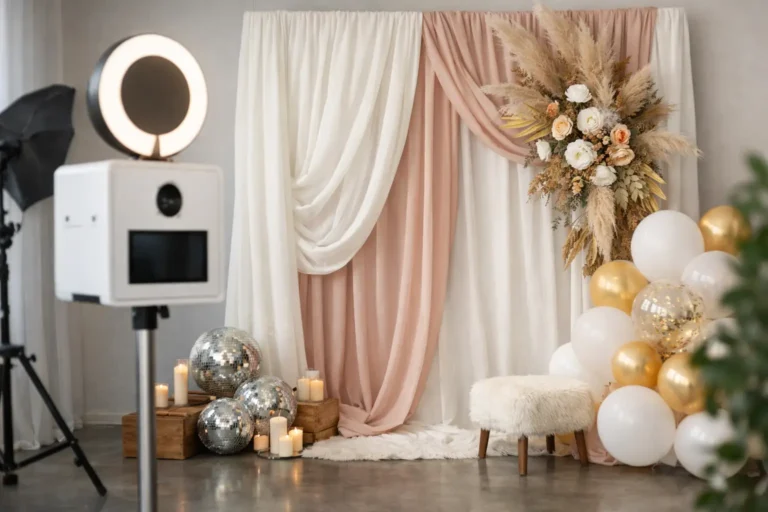
Fabric remains one of the most refined options, particularly for country house weddings, boutique hotels and marquee receptions. It softens the frame, catches light beautifully and creates a sense of depth without competing with the people in front of it. Ivory, stone, taupe and muted blush tones all photograph elegantly and tend to work across a wide range of styling schemes.
The key is finish. Crisp draping feels architectural and modern, while looser folds feel more romantic. Both can work. It depends on whether the wedding leans tailored and contemporary or softer and more organic.
Floral and foliage backdrops
These create instant impact and can be exceptional when the wider wedding design already includes strong floristry. They work particularly well when the booth is intended as a statement area rather than a discreet touchpoint. Guests are naturally drawn to them, and the images feel rich and celebratory.
That said, floral backdrops need restraint. If the arrangement is too dense, too varied in colour, or too detailed, the photograph can feel visually busy. Faces should remain the focus. The backdrop should elevate the image, not overwhelm it.
Clean studio-style backdrops
For couples drawn to a fashion-led look, studio-style backdrops are often the most effective choice. Plain, beautifully lit surfaces in white, black, soft grey or warm neutrals create an editorial result that feels timeless. They are especially strong for black-and-white photography, where texture, contrast and expression matter more than decorative detail.
This style suits modern venues, design-led barns and city celebrations where the brief is elegant, sharp and understated. It can also be the perfect counterpoint in a highly detailed room, giving the photography a cleaner visual pause.
Textured and statement finishes
Metallics, shimmer surfaces, panels, arches and bespoke printed designs all have their place, particularly when a couple wants the booth to act as a high-impact installation. Used well, these can bring energy, depth and a distinct point of difference.
The trade-off is that bold finishes are less forgiving. They need the right lighting, enough surrounding space and a booth style that complements them. If the backdrop is dramatic, every other element around it needs to feel equally considered.
Matching the backdrop to your venue
One of the simplest mistakes is choosing a backdrop in isolation. A backdrop that looks extraordinary in a showroom or mood board can feel oddly placed once it arrives at the venue. Scale, ceiling height, flooring, wall colour and ambient light all change the effect.
In a grand country estate, a backdrop often needs enough presence to stand up to the architecture. In a boutique hotel, it may need to feel more tailored and intimate. In a luxury barn, texture becomes especially important, because exposed beams, timber and natural materials already create visual character.
Placement matters just as much as style. If the booth is positioned near a bar, dance floor or main circulation route, the backdrop should be attractive from a distance and easy to engage with quickly. If it sits in a quieter drawing room or reception area, there is more room for detail and subtlety. The installation should feel naturally placed, never squeezed in as a logistical compromise.
Why lighting changes everything
Even the most beautifully designed backdrop can disappoint if the lighting is not handled properly. Guests usually notice the backdrop first, but what they remember is the photograph. That means the finish, colour and texture all need to work with the booth lighting, flash and the room itself.
Darker backdrops can look rich and sophisticated, but they require careful control to keep skin tones flattering and images crisp. Very reflective surfaces can create brilliant energy, yet they may produce hotspots if not lit correctly. Lighter backdrops tend to be more versatile, though they still benefit from depth and shadow so the result does not feel flat.
This is why backdrop choice should never be separated from the booth experience itself. The camera setup, print style, flash quality and image treatment all influence what will look best. A refined final image is rarely down to one element. It comes from everything working together.
How to make the booth feel part of the wedding design
The most elegant installations borrow cues from the wedding without copying them literally. If your tables are layered with soft neutrals, antique gold and candlelight, the booth backdrop might echo that palette through fabric tone and warm lighting rather than repeating every floral variety. If your day is modern and monochrome, a sharply edited backdrop with minimal styling may feel far more luxurious than anything heavily embellished.
Consistency is what creates that elevated, editorial finish. Materials, tones and silhouettes should feel connected. Even the booth exterior, props and print design should sit comfortably within the same visual world.
For couples who want a truly polished result, it helps to think of the booth as an installation rather than entertainment. That shift changes the decisions. You begin considering sightlines, guest flow, image style and how the space feels in the room. The backdrop becomes part of a broader guest experience, not simply a pretty wall behind the action.
The practical questions worth asking
When reviewing backdrop options, aesthetics should lead, but practicality still matters. Ask how much space the installation needs to breathe, whether the venue access affects what can be built, and how the backdrop will appear in both daylight and evening conditions.
It is also worth considering how many guests will typically be in shot at once. A backdrop for couples’ portraits can be narrower and more focused. A backdrop for lively group photographs needs width, visual balance and enough margin that nobody appears cramped at the edges.
Then there is durability. Weddings are dynamic environments. Guests move quickly, celebrations gather pace and installations need to hold their finish from the first drinks reception portrait to the final late-night group shot. The most successful backdrops are not only beautiful on arrival – they remain immaculate throughout the event.
Choosing a backdrop that will still feel right years later
Wedding trends move quickly, but photographs last. That does not mean every couple should default to something neutral and safe. It means the backdrop should be chosen with a sense of longevity as well as impact.
Timeless usually comes from proportion, texture and quality, not from playing everything down. A dramatic floral wall can still feel enduring if it is beautifully composed. A stark monochrome backdrop can still feel warm if the lighting and styling are right. The real question is whether the choice reflects your taste, your venue and the atmosphere you want your guests to remember.
At its best, a booth backdrop becomes more than a background. It sets the tone for the photographs, anchors the installation within the room and gives guests a moment that feels unmistakably premium. If the rest of your wedding has been thoughtfully designed, this should be too. The most memorable details are often the ones that look effortless once every decision behind them has been made with care.