Design-Led Photo Booths That Feel Like Art
The quickest way to spot a forgettable photo booth is when it feels like an add-on: a collapsible frame, a bargain backdrop, a pile of plastic props and a queue that moves too slowly. It fills a corner, ticks a box, and looks like it.
A design led photo booth does the opposite. It arrives with intent. It belongs in the room. It photographs beautifully even when nobody is in it, and when guests do step in, the result looks like it was made for that event – not dragged in from the last one.
What “design led” actually means (and what it does not)
Design led is not a synonym for expensive, although it often costs more because the decisions are more considered. It means the experience starts with the visual world of your event – architecture, lighting, palette, dress code, brand guidelines, even the tempo of the evening – and then builds a booth concept that fits.
It is also not about turning everything into beige minimalism. A design led photo booth can be bold, playful, or high-fashion. The point is coherence. Nothing should feel tacky, accidental, or mismatched to the venue.
At its best, it behaves like a small installation. Guests understand where to stand, what to do, and why it is special within seconds. That clarity is design, not luck.
Why a design led photo booth changes the feel of an event
A premium event is a sum of details: the weight of the paper stock, the tone of the florals, the way candlelight lands on linen. Visual noise breaks the spell. When the photo booth looks like a hire item, it can pull focus in the wrong way – suddenly the room feels more function suite than celebration.
A design led approach holds the line. The booth becomes part of the set, not a distraction from it. Guests are more likely to use it because it feels flattering and intentional, and they are more likely to share the output because it looks like something you would post.
That shareability matters for corporate events, too. If you are investing in a brand moment, the assets should be on-brand by default – not rescued later in a rush of cropping, filters, and apologies.
The three design decisions that separate premium from “photo booth hire”
1) Form factor: the booth as an object
The physical presence of the booth sets expectations before a single photo is taken. Clean lines, beautiful materials, and a confident silhouette read as premium at a glance. Think oak-crafted finishes, properly considered proportions, and equipment that looks like it was chosen, not sourced.
Form factor also affects flow. An open, inviting set-up encourages groups. A more sculptural, self-contained booth can feel exclusive and editorial. Neither is universally “better” – it depends on your space and what you want guests to do.
2) Light: flattering by design, not by chance
Lighting is where most booths quietly fail. Venues are rarely lit for photography. Mixed temperatures, spotlights, uplighters, fairy lights, and daylight spill all compete. The result can be harsh shadows, shiny foreheads, and a background that disappears.
A design led photo booth treats lighting as part of the aesthetic, not just a technical necessity. Soft, controlled light that suits skin tones, consistent exposure across the evening, and a background that reads crisply on camera all make the final images feel deliberate.
There is a trade-off here: ultra-soft, editorial light can feel more “fashion” but may reduce the punch of a busy party atmosphere. Brighter lighting can energise groups but can tip into clinical if not handled carefully. The right choice depends on whether you want nightclub energy or magazine polish.
3) Output: what guests take away and what you keep
Prints are still powerful, especially at weddings and private celebrations. The best ones feel like keepsakes: sharp imagery, rich blacks, true-to-life skin tones, and layouts that do not look like a template from a decade ago.
Digital sharing can be just as premium when it is curated. Branded overlays that actually match your identity, not just your logo pasted on top. Crops that flatter. A rhythm that gets guests their content quickly without feeling frantic.
The question to ask is simple: would you be happy for these assets to represent your event publicly? If the answer is “only after editing”, then it is not design led yet.
Backdrops, styling, and the difference between “pretty” and “considered”
A backdrop can be beautiful and still be wrong for the room. What reads well in a warehouse can look stark in a candlelit manor house. What works beside a neon sign can fight with soft florals. Design led means choosing for context.
If your venue has architectural interest – panelling, stone, dramatic windows – the smartest move is often to complement rather than compete. If the room is visually simple, the booth can be your statement. Either way, the styling should be edited. A handful of elegant props that guests genuinely want to pick up beats a table of novelty items every time.
For corporate events, the backdrop is also a brand surface. The design led approach avoids the “trade stand” look by keeping brand elements integrated and restrained. When it is done well, it feels like brand world, not brand shout.
Four design-led booth experiences, and when each suits best
Different booth styles create different social behaviour. Choosing well is less about features and more about the guest journey you want.
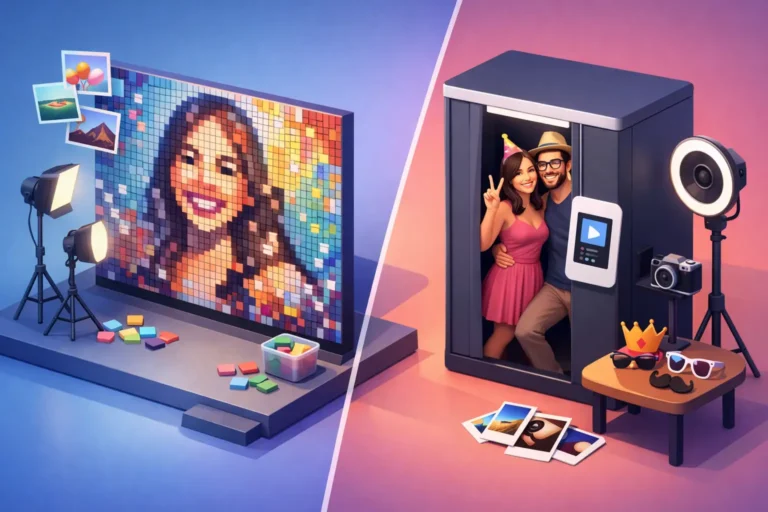
A Digital booth is often the most versatile for modern events. It leans into fast sharing, on-screen prompts, and clean, contemporary output. It suits corporate parties and weddings where guests want instant content without sacrificing finish.
A Retro booth changes the emotional tone. It has nostalgia, warmth, and a sense of occasion – perfect for country estates, elegant barns, and celebrations where guests are dressed to the nines and want something that feels timeless.
An ICON-style experience tends to be bolder, more statement-led, and often works beautifully as a visual anchor in a larger event space. It is the choice when you want the booth to be seen from across the room and treated as part of the set design.
A Glam black-and-white look, often called the “Kardashian” style, is pure editorial. It is flattering, high-fashion, and intentionally minimal, which makes it ideal for luxury weddings, awards nights, and brand events that want a polished, celebrity-adjacent finish.
When to add an interactive activation instead of a booth
Sometimes a photo booth is not the hero. If your goal is spectacle, crowd pull, or a live moment that evolves across the event, an activation can outperform a standard photo set-up.
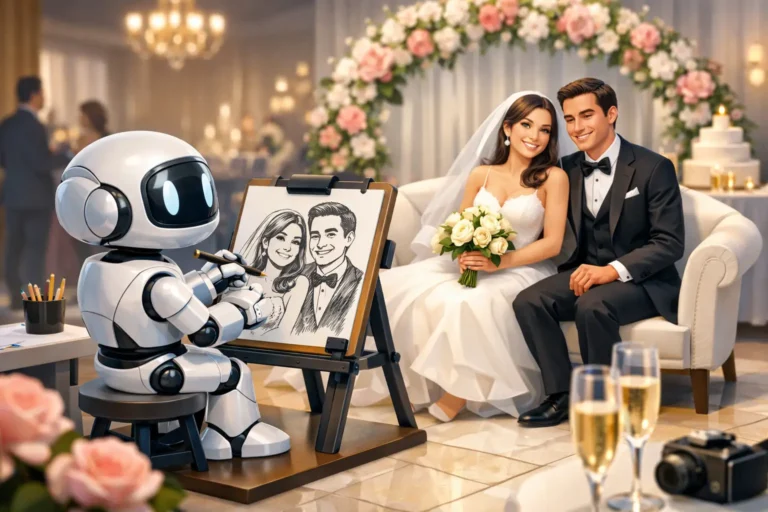
AI Sketch Bots create that instant theatre: guests watch their portraits become art. It works brilliantly for corporate events where you want a takeaway that feels personal and slightly unexpected, without straying into gimmick.
A live Mosaic Wall is a different kind of magic. It turns individual captures into a collective artwork that grows throughout the night. That is ideal for product launches, conferences, or weddings where you want a visual centrepiece that becomes more meaningful as the room fills with memories.
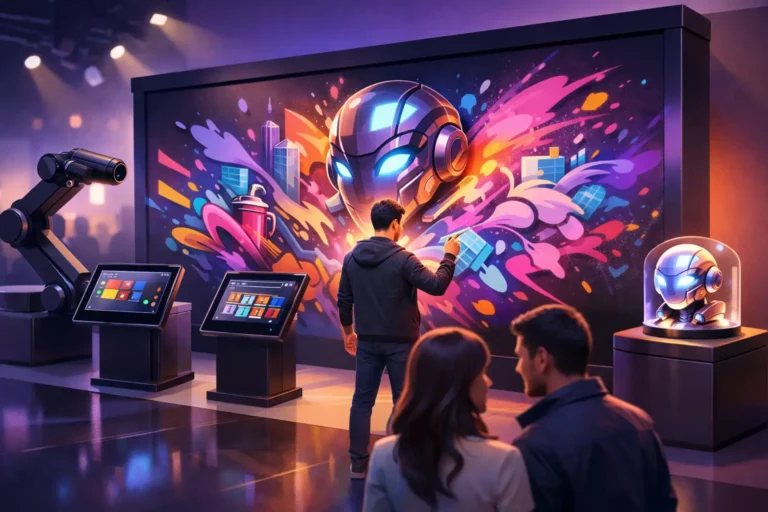
An AI Graffiti Wall can be striking when you need high energy, bold visuals, and a more interactive crowd dynamic. The key is keeping the styling controlled so the look stays premium. The wrong environment can tip it into chaotic; the right environment makes it feel like live art.
The questions to ask before you book
If you are planning a luxury wedding or a high-profile corporate event, the best supplier conversations sound less like a hire list and more like creative direction.
Ask how the booth will be styled to suit your venue and lighting, and what happens if the room is darker than expected. Ask to see recent galleries from similar spaces, not just studio shots. Ask what the guest journey looks like at peak time – because queues kill energy.
And ask what “premium imagery” means in practice. Sharpness, flattering light, consistent colour, and files you would happily use in a post-event gallery are the standard you should be buying.
Why delivery matters as much as design
Luxury is as much operational as aesthetic. A beautiful set-up that arrives late, needs constant tweaking, or requires your planner to solve problems is not luxury.
The design led photo booth experience should feel concierge-level: a confident team, quick installation, tidy footprint, and a presence that is helpful without being intrusive. Guests should feel guided, not herded. Hosts should feel looked after, not needed.
This is where investing a little more usually pays off. You are not just paying for the booth, you are paying for the calm that keeps the day feeling effortless.
If you are looking for a refined, design-conscious approach across premium booths and modern AI activations, MooMuu Experiential is built for that brief – with curated experiences delivered across the UK, and a strong footprint in the South West. You can see the collection at https://www.moomuu.co.uk.
The real measure of “design led”
A design led photo booth is not judged by how clever it looks on a spec sheet. It is judged by the moment a guest sees it and thinks, without being told, this is going to look good. If that feeling is there – and the output matches it – the booth stops being entertainment and starts being part of the event’s identity.