

Why Do Brands Use Photo Activations?
Why do brands use photo activations? They turn events into shareable moments, spark engagement, and create polished content with lasting value.
A beautifully designed event can still leave very little behind once the room empties. That is one of the clearest answers to why do brands use photo activations – they give guests something to do, something to share, and something worth remembering long after the final drink is poured.
For luxury brands, ambitious corporate teams, and agencies producing high-visibility events, that matters. A photo activation is not simply a camera in the corner. Done properly, it becomes part of the event design, part of the guest journey, and part of the brand story. It creates a moment people actively step into, rather than a backdrop they pass by.
Why do brands use photo activations at events?
The short answer is that they work on several levels at once. They attract attention, encourage participation, generate high-quality branded content, and extend the life of an event beyond the venue itself.
That combination is powerful because most live events are under pressure to deliver more than atmosphere. Internal teams want measurable engagement. Agencies want a strong visual centrepiece. Guests want experiences that feel considered rather than formulaic. Photo activations sit neatly at that intersection when they are thoughtfully curated.
At a product launch, they can introduce the brand world in an interactive format. At a corporate celebration, they can shift energy in the room and create a focal point that feels elevated rather than novelty-led. At a public-facing event, they can help turn passing interest into active participation. The best ones do all of this while producing imagery a brand is actually happy to have associated with its name.
They create participation, not just presence
A great event is not only about attendance. It is about involvement. Brands use photo activations because they invite people to step forward and engage in a way that feels natural.
That matters more than many organisers expect. Guests often need a reason to move, mingle, and interact with an installation. A design-led photo moment provides that prompt. It gives people a clear action to take and an immediate reward for doing so. Instead of simply observing the event, they become part of it.
There is also a psychological shift at play. When someone poses, prints, draws, personalises, or contributes to a live visual build such as a mosaic wall, they are no longer a passive attendee. They are creating something within the branded environment. That sense of participation builds affinity far more effectively than static signage ever could.
Photo activations make brands more shareable
Not all event content deserves to travel. Brands use photo activations because they produce images people genuinely want to post, save, and send on.
The difference lies in quality and intention. If the lighting is flattering, the styling is refined, and the output feels editorial, guests are much more likely to share it. That gives brands a stream of user-led exposure without the content feeling forced.
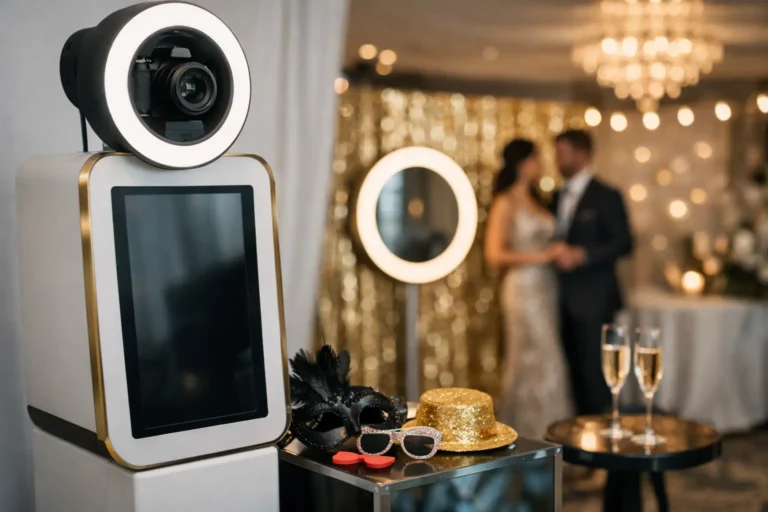
This is especially valuable for businesses that care deeply about visual identity. A polished black-and-white glamour setup, an oak-crafted booth with elegant styling, or an AI-led creative installation all create a stronger impression than generic event entertainment. The brand remains visible, but the content still feels personal to the guest. That balance is difficult to achieve in any other format.
Of course, shareability is not only about social media. A branded photograph can sit in a camera roll for months, resurface in private group chats, or appear in post-event presentations and internal comms. Good activations create content with a longer shelf life than the event itself.
Why do brands use photo activations for brand recall?
People rarely remember every speech, every canapé, or every line of event copy. They do remember how an experience made them feel, and visual interactions help fix that feeling in the memory.
This is another reason why do brands use photo activations so often in premium event settings. The image becomes a memory trigger. Weeks later, a guest sees the photo and recalls the room, the mood, the product launch, or the celebration attached to it.
For consumer brands, that can strengthen recognition and emotional connection. For corporate events, it can improve internal engagement by attaching positive memories to the occasion. For agencies, it gives clients visible evidence of attendance, interaction, and atmosphere.
The key is that the activation must feel aligned with the wider event. If the styling clashes with the venue or the output looks off-brand, recall can work against you. Strong recall is only useful when the memory feels polished and intentional.
They help events feel more considered
There is a marked difference between adding entertainment and curating an experience. Premium brands use photo activations because they can act as a statement installation, not just an add-on.
This is where design matters. Materials, finish, framing, backdrop selection, prop styling, interface design, and image quality all influence whether an activation feels luxurious or forgettable. In high-end spaces, guests notice those details.
When the activation is visually cohesive with the venue and event identity, it strengthens the whole production. It can soften a large corporate room, add energy to a launch, or provide a refined talking point during drinks and transitions. It also photographs well as part of the event itself, which is an often-overlooked advantage for planners and marketers collecting wider coverage.
There is, however, a trade-off. A highly branded activation may be excellent for campaign consistency, but if it becomes too promotional, guest participation can drop. Equally, a very artistic installation may generate strong engagement while communicating the brand less directly. The right balance depends on the event objective.
The data is useful, but the experience comes first
Some teams approach photo activations primarily as a data or lead-generation tool. That can make sense in certain public-facing environments, especially exhibitions or consumer events, where opt-ins and follow-up matter.
But for many premium events, the stronger value lies elsewhere. The immediate priority is guest experience, content creation, and brand perception. If those are handled well, the commercial value often follows.
A guest who has had a genuinely enjoyable interaction is more likely to remember the brand favourably, engage with future communications, and speak positively about the event. That is less direct than a sign-up form, but often more meaningful.
For this reason, the most effective activations do not feel transactional. They feel hosted, considered, and easy to use. The technology should support the experience, not dominate it.
Different formats achieve different things
Not every photo activation serves the same purpose, and that is precisely why brands continue to invest in them. A classic digital photo experience is excellent for fast participation and immediate sharing. A retro-style setup introduces charm and tactility. A glamour booth can create a distinctly editorial finish that suits fashion-forward audiences and premium celebrations.
AI-led activations add another layer. They signal innovation and can generate stronger curiosity from guests who have seen standard event formats before. An AI Sketch Bot or AI Graffiti Wall, for example, turns content creation into live spectacle. People are not only receiving an image. They are watching the process unfold and often gathering around while it happens.
Then there are collective experiences such as mosaic walls, where individual participation builds into a larger visual result. These are especially effective when a brand wants to create a sense of shared contribution or reveal a final image with impact later in the event.
The choice depends on what the brand wants guests to feel. Intimate and polished, bold and playful, innovative and unexpected, or communal and memorable – each activation shapes the atmosphere differently.
Why the luxury end of the market values them even more
In premium environments, expectations are higher. Guests are familiar with beautifully produced events and less easily impressed by anything that feels generic. That is exactly why refined photo activations have such value.
They offer a rare combination of entertainment, aesthetics, and output. Guests enjoy the interaction in the moment, yet the end result also looks good enough to keep. For planners and brand teams, that means fewer compromises. The installation can contribute to the visual language of the event while still delivering energy and engagement.
This is where a specialist provider makes a visible difference. Styling, image quality, pacing, staffing, and integration all matter. A luxury event has very little tolerance for clumsy branding, awkward queues, or outputs that look at odds with the setting. When the activation is thoughtfully curated and seamlessly delivered, it elevates rather than interrupts.
MooMuu Experiential operates in exactly that space – where the booth or installation is expected to feel unmistakably premium, visually coherent, and worthy of the wider event design.
The real reason brands keep coming back to them
Photo activations continue to earn their place because they solve a familiar event problem in an elegant way. Brands want guests to engage, but not feel sold to. They want content, but not at the expense of atmosphere. They want impact in the room and value after the event.
A well-executed photo activation can deliver all three.
That does not mean every event needs one. If the format is wrong for the audience, or the creative direction is weak, it can feel decorative rather than essential. But when it is chosen with care and designed to match the tone of the occasion, it becomes one of the few event elements that is both immediately enjoyable and commercially useful.
The smartest brands understand that people remember what they interacted with. Give them a moment that looks exceptional, feels effortless, and leaves them with something worth keeping, and the brand stays with them a little longer.