
Guide to Mosaic Wall Event Installation
A refined guide to mosaic wall event installation, from layout and guest flow to styling, logistics and creating a standout live event feature.
Some installations entertain for a moment. A mosaic wall changes the atmosphere of the room as it builds, turning guest interaction into a visual centrepiece that grows more striking by the hour. This guide to mosaic wall event installation is for planners, brands and couples who want more than a novelty – they want a feature that feels considered, elegant and genuinely memorable.
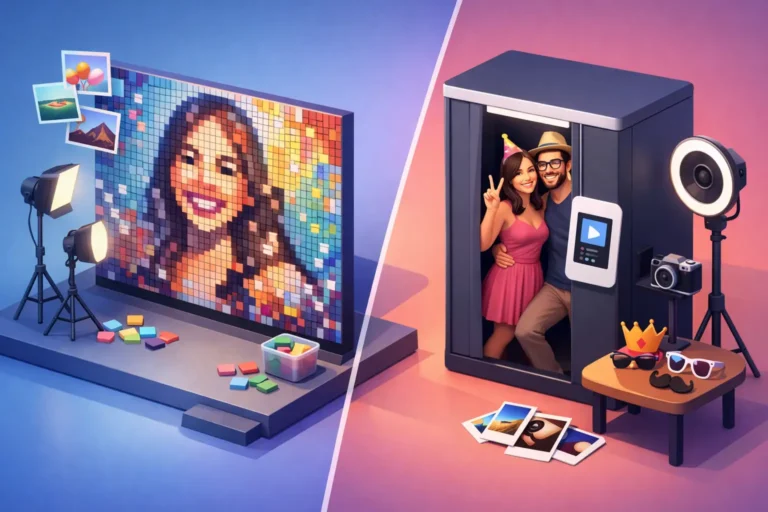
The appeal is simple, but the effect is sophisticated. Guests take part in the creation of a larger image, tile by tile, photograph by photograph, until the finished piece reveals itself in real time. At a wedding, that might become a beautifully layered portrait or monogram-driven artwork. At a corporate event, it can form a branded visual with genuine audience participation behind it. Either way, the installation works best when it is planned as part of the event design, not added as an afterthought.
Why a mosaic wall works so well at live events
A mosaic wall offers something many activations struggle to achieve. It gives guests an immediate role, while also rewarding patience. Early in the event, it creates intrigue. Midway through, it becomes a talking point. By the end, it has transformed into a finished display with emotional and visual weight.
That progression matters. Design-led events rely on moments that evolve, not just static decor. A mosaic wall provides movement and momentum without becoming chaotic. Guests understand the concept quickly, yet the final reveal still feels satisfying. For luxury weddings and polished brand events, that balance is valuable. The interaction is accessible, but the result can feel distinctly elevated.
There is also a practical advantage. Unlike standalone entertainment that peaks and fades, the wall remains present throughout the event. It gives photographers, planners and hosts a live focal point, and it encourages repeated engagement as guests return to see how far the image has developed.
Guide to mosaic wall event installation planning
The success of a mosaic wall is rarely down to the wall alone. It depends on where it sits, how guests move around it and how clearly the experience has been curated. Installation planning starts with the event itself.
Begin with the purpose. If the event is a wedding, the mosaic may be about shared memory, guest contribution and a keepsake-quality finish. If it is a corporate activation, the wall may need to support brand visibility, dwell time and social content. Those aims shape everything from image choice to placement.
The next decision is scale. A larger wall makes a stronger statement, but it also needs more room around it to feel refined. In a spacious country house or hotel ballroom, that scale can be dramatic. In a tighter venue, a more considered footprint often works better. A crowded installation loses impact quickly, particularly if queues begin to spill into bars, dining areas or key circulation routes.
Image selection deserves more attention than many clients expect. Not every photograph or artwork translates beautifully into a mosaic. High contrast, clear composition and a strong central subject usually perform best. Subtle, low-definition imagery can look elegant in print but become underwhelming when broken into many smaller components. The finished design needs to read clearly both up close and from across the room.
Placement, sightlines and guest flow
Where you place the installation changes how it is perceived. The best positions are visible without obstructing the event. Guests should notice the wall naturally, not discover it accidentally once the evening is half over.
Entrance-adjacent placements can work well for brand events, particularly when early engagement is a priority. That said, they are not always ideal for every guest journey. At a wedding, for example, the first moments on arrival are often occupied by greeting, drinks and orientation. In those settings, a mosaic wall slightly beyond the initial arrival point often feels more intuitive.
Sightlines are equally important. The wall should have enough visual breathing space around it to let the final image emerge properly. If it is hemmed in by service doors, stacked furniture or competing decor moments, the effect is diluted. A design-conscious event benefits from restraint. Give the wall room, and it will hold attention without fighting for it.
Guest flow needs to feel calm. There should be a natural approach, a clear participation point and an easy exit. If guests have to double back through a queue or pause awkwardly in a busy corridor, the experience loses polish. This is where a thoughtfully delivered setup makes all the difference. Luxury is often felt in the absence of friction.
Styling the installation to suit the event
The most successful mosaic walls feel integrated into the wider environment. That means thinking beyond the mechanics and focusing on styling. Frame finish, surrounding decor, signage and adjacent lighting all influence whether the activation feels editorial or improvised.
For weddings, a softer visual approach often suits the setting. Neutral tones, elegant florals and understated signage can allow the mosaic itself to become the statement. For corporate events, the styling may be sharper and more brand-led, but refinement still matters. Oversized logos and overly busy supporting graphics can overwhelm the artwork rather than elevate it.
Lighting deserves careful thought. The wall should be bright enough to read clearly, yet not so harsh that it feels clinical in a beautifully lit room. Warm, directional lighting often flatters the structure and makes the evolving image easier to appreciate. If the event design already includes dramatic lighting changes later in the evening, the installation should still remain legible once the atmosphere shifts.
This is often where premium experiential planning separates itself. The goal is not simply to make the installation visible. It is to make it feel unmistakably part of the event’s visual language.
Operational details that shape the guest experience
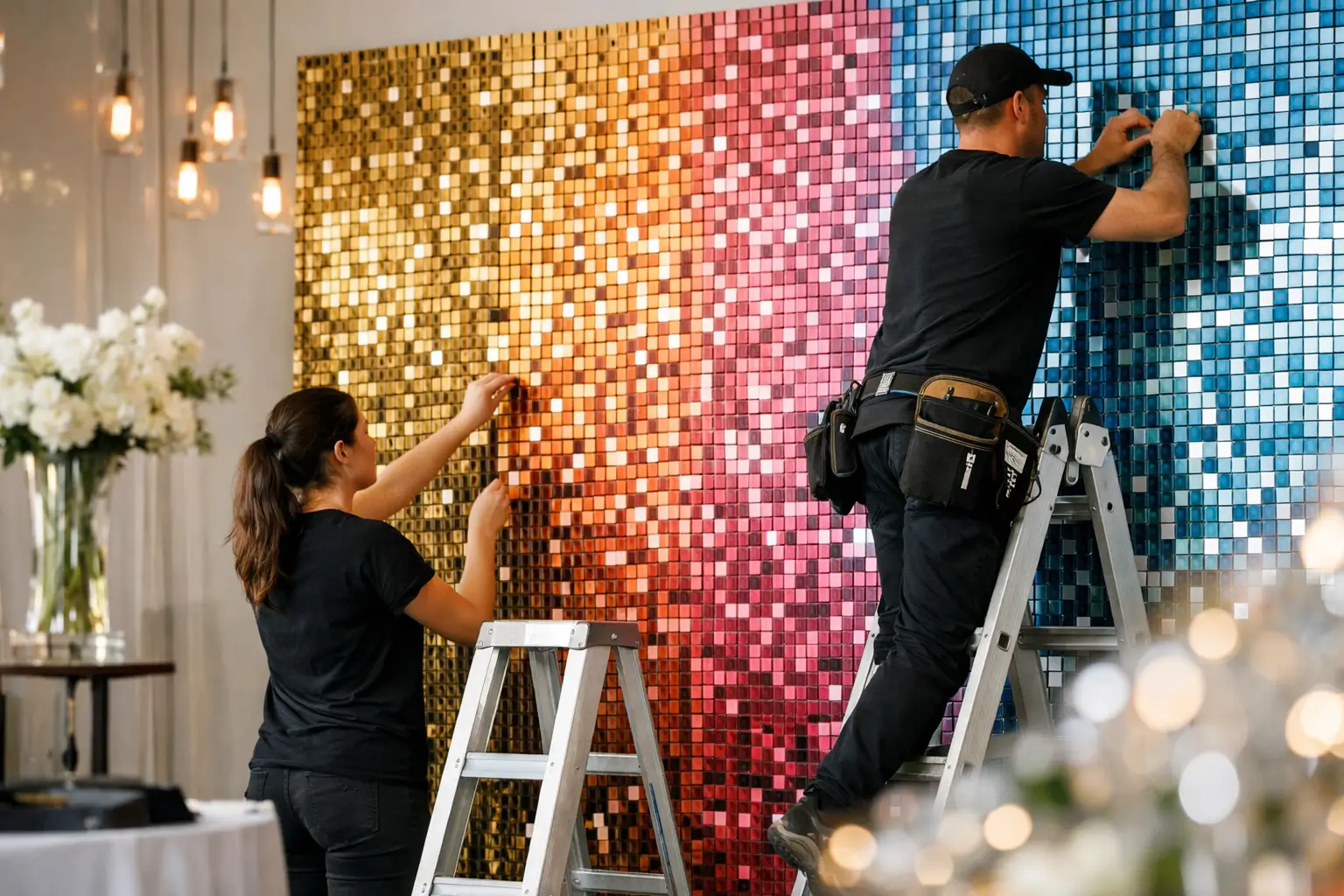
Even the most striking concept relies on excellent logistics. A mosaic wall is guest-facing, but it is also an operational setup that needs power, access, build time and on-site management. When those details are handled well, guests barely notice them. They simply experience an activation that feels smooth from the first photo to the final reveal.
Venue access should be confirmed early, especially at estates, listed properties and high-profile corporate venues with restricted loading. Build schedules, supplier coordination and placement approvals all need to happen before event day. A sophisticated installation should arrive looking effortless, but that finish comes from preparation.
There is also the question of pacing. Some events generate steady participation from the outset. Others need a subtle prompt to encourage early momentum. A drinks reception may require a little more hosting presence than a conference celebration where guests are already primed for branded interaction. Neither is better or worse – it simply depends on the crowd.
This is one of the key trade-offs in any guide to mosaic wall event installation. A highly visible placement increases curiosity, but may also create congestion if guest flow is not managed. A more discreet placement preserves elegance, but may require stronger signposting or presenter support to ensure uptake. The right answer depends on the venue, the guest profile and the event’s tempo.
Weddings, brand activations and private events
The installation should always reflect the mood of the occasion. At a luxury wedding, the emotional value is often the strongest part of the experience. Guests are not just taking part in an activity. They are contributing to a shared artwork that captures the spirit of the day. The finished mosaic becomes part entertainment, part memory piece.
For brand activations, the value is slightly different. Here, the wall can become a high-engagement touchpoint that invites interaction while creating a branded visual with substance. It offers a more considered form of audience participation than many fast-turn activations, which is precisely why it suits premium environments so well.
Private celebrations sit somewhere between the two. Milestone birthdays, anniversaries and exclusive parties often benefit from installations that feel personal but still visually impressive. In these settings, the mosaic wall works especially well when the event design is already curated and the host wants a focal point with lasting presence.
For clients seeking a polished, design-led approach, providers such as MooMuu Experiential understand that the installation is only one part of the result. The guest journey, styling and operational finesse are what make the experience feel exceptional.
What to ask before you book
Before confirming a mosaic wall, ask how the final image will be chosen and reviewed, how much space is needed around the installation and what support is included on site. It is also worth discussing venue access, lighting conditions and whether the event schedule allows enough time for the wall to build impact properly.
You should also ask how the installation will sit alongside other event moments. If speeches, dining and entertainment are tightly sequenced, the mosaic wall needs to complement that rhythm rather than compete with it. A beautifully curated activation should enhance the event flow, not interrupt it.
The most memorable event features are rarely the loudest. They are the ones guests are drawn to naturally, the ones that photograph beautifully, and the ones that still feel meaningful when the night is over. A mosaic wall does exactly that when it is planned with intention, styled with care and delivered to the standard the setting deserves.
If you are considering one for your event, treat it as a statement installation from the start. The finished image may be the final reward, but the real magic is watching it come to life in the room.