
Digital Mosaic Photo Review: Four Decisions to Rehearse
Rehearse four Digital Mosaic submission decisions, compare two reviewers’ answers and use a practical worksheet to agree the outcome, responsible person and next step.
A clear portrait, an awkward crop, a photograph with an unresolved permission question: would everyone reviewing your Digital Mosaic make the same decision? A short rehearsal helps your team agree what belongs in the artwork, who handles exceptions and what to say when a contribution needs another look.
This guide gives you four hypothetical submissions to discuss, a two-reviewer exercise and a record you can copy into your event brief. Use them before guests are invited to contribute, while there is time to make the instructions clear and welcoming.
Agree the review arrangements first
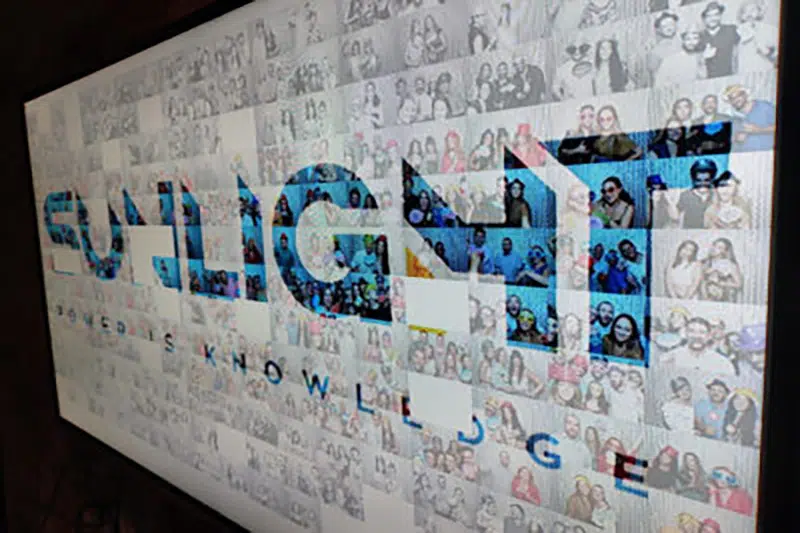
MooMuu’s Digital Mosaic brings guest photographs together into a shared on-screen artwork. People can take a new photograph or upload an existing one through a QR code or branded link, whether they are at the venue or joining remotely.
Moderation is optional and must be agreed before the event. Confirm who reviews contributions, who can decide exceptions and how decisions will be handled within your chosen setup. On-site delivery and remote monitoring have different arrangements; your proposal should identify the agreed operating window and responsibilities.
The exercise below is a planning worksheet. Confirm the practical review and contact arrangements with MooMuu rather than assuming that every submission can trigger a message or replacement request. A contributor may not have supplied a way to contact them.

Set one example brief
For this rehearsal, imagine an internal event inviting clear individual portraits for a shared team artwork. The example rules ask for one recognisable person, with their face visible, and require any uncertainty about using someone’s photograph to be referred to the organiser. A named organiser approves exceptions.
These are rules for this hypothetical event, not universal MooMuu acceptance criteria. Your mosaic could welcome group photographs or other subjects. Write down your own brief before practising, including the intended display and use of the finished artwork.
Rehearse these four submissions
Use descriptions or suitable test images for the rehearsal. Each decision should have a reason tied to the agreed brief and a clear next step.
| Hypothetical submission | Decision, reason and next step |
|---|---|
| 1. A clear individual portrait The face is visible and the photograph meets the example rules. | Accept through the agreed review process. Record that the image fits the portrait brief and that no question requiring escalation has been identified. Confirm the next step with the person responsible for the agreed review process. |
| 2. A portrait with the face cropped out The subject cannot be recognised in the submitted image. | Request a replacement if an agreed contact route permits. Explain the specific issue: “Please choose a photograph with your face clearly visible.” Record who will follow up. If contact is unavailable, record that and follow the agreed review rule. Do not assume the missing detail can be recovered by editing. |
| 3. A portrait with an unresolved permission question A clear individual portrait shows someone other than the contributor, and permission to use that person’s photograph has not been clarified. | Hold for the named organiser’s decision. Record the uncertainty and the person responsible for resolving it. Do not treat the act of uploading as an answer to a separate permission question. Keep the case unresolved until the agreed decision-maker responds. |
| 4. A product-only photograph The image is clear, but this example brief asks for individual portraits. | Exclude it from this example mosaic. Record the portrait rule as the reason. Where contact is possible through the agreed route, explain the invitation kindly and offer the correct instruction. A different event brief could make a different decision. |
Ask two reviewers to work independently
The useful part is finding where reasonable people interpret the same brief differently. Choose two people involved in the review or approval arrangements. Give both the same brief and submission descriptions, without the suggested decisions above. Compare their answers with the examples afterwards.
- Record separate answers. Each reviewer notes a decision, the relevant rule, their reason and the next action before discussing the examples.
- Compare the reasoning. Look for unclear wording as well as different outcomes. Two people may choose the same answer for conflicting reasons.
- Resolve the rule. Ask the named approver to clarify disagreements. Update the written brief, including who decides when a new situation falls outside it.
- Repeat the difficult examples. Check that both reviewers can now explain the agreed decision and next step. Leave unresolved cases for clarification rather than assuming approval.
Copy this review record
Use one record per example or exception. A simple reference is usually enough to identify the case; keep unnecessary personal details out of the working note.
| Record field | Your note |
|---|---|
| Example or submission reference | ________________ |
| Brief version and applicable rule | ________________ |
| Reviewer A: decision and reason | ________________ |
| Reviewer B: decision and reason | ________________ |
| Agreed outcome and approving person | ________________ |
| Communication route, if available | ________________ |
| Next action and responsible person | ________________ |
| Resolution or outstanding question | ________________ |

Turn the rehearsal into a shared brief
Keep the approved rules, final brief version, decision-maker, moderation arrangement, operating window and exception route together. Make sure the people introducing the mosaic use the same invitation as the people reviewing it.
For wider decisions about artwork, participation and the reveal, see our mosaic planning guide, which distinguishes the physical and digital formats. To discuss a Digital Mosaic, send MooMuu your event brief with your date, audience and intended artwork, plus any review arrangements you need. We can then agree how the experience should work for your guests.


