

Air Graffiti Wall Hire
AI Graffiti Wall 2026: The Future of Interactive Event Experiences in the UK
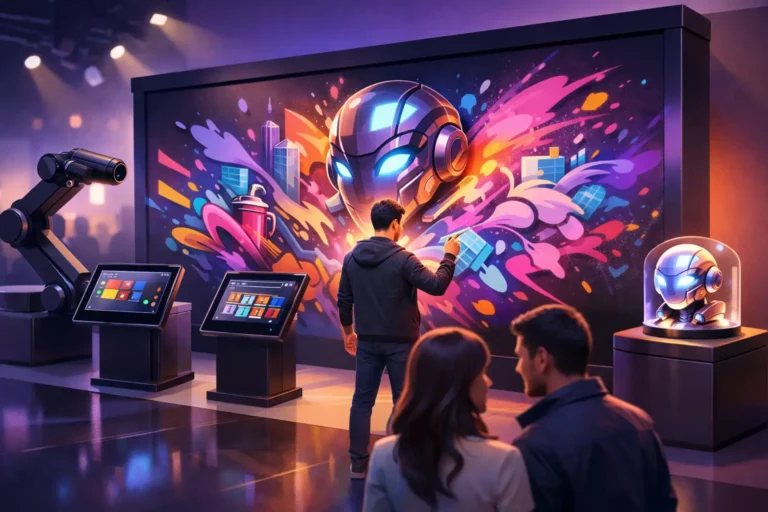
Imagine walking into a launch party in London and being handed what looks like a digital spray can. You point it towards a glowing wall and suddenly colour bursts into life, flowing and shifting with every movement of your hand. It feels almost as if the wall is breathing with you. That’s the concept behind an AI graffiti wall, a technology-driven art installation gaining serious traction across the UK in 2026.
These immersive walls combine artificial intelligence with motion sensors, augmented reality and touch-responsive screens to transform blank surfaces into interactive creative spaces. Instead of paint, guests use gestures. There’s no mess, no fumes, and no risk to your outfit. The results feel personal, as if the artwork responds to your rhythm or mood. Each movement becomes a dynamic exchange between person and machine.
As events move beyond static backdrops and standard photo booths, AI graffiti walls champion shared creativity, bringing art, motion and imagination together in a way that feels genuinely modern.
The Rise of AI-Powered Art Experiences
Across the UK events industry, personalisation has become the dominant theme for 2026. Guests no longer want to simply observe; they expect to participate. That shift explains why AI graffiti walls are drawing attention at corporate launches, festivals and experiential brand activations throughout the country.
Using infrared sensors and smart cameras, these walls track every flick and sweep of a hand. AI software translates those movements into glowing strokes, textured light trails or layered visual effects in real time. Some advanced systems even respond to voice tone or facial expression, subtly shifting colour palettes to match mood. The result feels surprisingly intuitive and emotionally engaging.
The global AI art market reflects this surge in interest, growing at approximately 29% compound annual growth and projected to reach $40 billion by 2033. That growth demonstrates how quickly creativity and technology are converging.
In the UK, interactive installations are now common at music festivals, brand showcases and cultural events, where they encourage social sharing and longer dwell time. A growing percentage of event attendees say they are more likely to post about experiences that allow them to contribute creatively. What once felt like a novelty is becoming part of how modern audiences expect to engage.
AI is not just enhancing art; it is reshaping how people experience it, blending code with emotion to create responsive, living environments.
How AI Graffiti Walls Work
At their core, AI graffiti walls function as intelligent digital canvases. When someone waves, sketches in the air or uses a stylus, sensors capture that motion and send the data to an AI engine. Within moments, the wall responds with colour bursts, flowing paint-style effects or animated patterns that evolve in real time.
More advanced installations use generative AI, allowing visuals to grow and adapt with each gesture. Draw a heart and it might dissolve into glowing particles. Create a simple line and it could ripple outward like light across water. The wall does not merely copy movement; it interprets it.
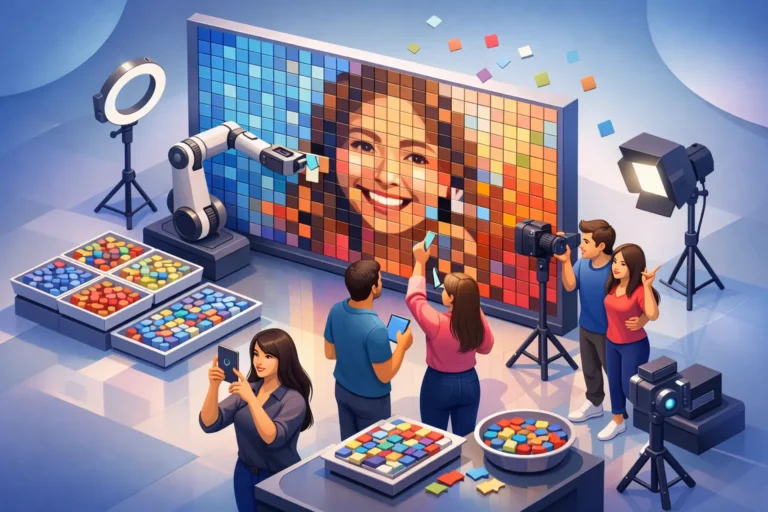
For UK event organisers, the appeal is clear. Instead of passive spectators, guests become contributors. Teams collaborate to create large-scale digital murals that can be saved, shared online or even printed as branded keepsakes. The atmosphere becomes naturally social, filled with laughter, quick creativity and plenty of camera phones.
Behind the scenes, neural networks trained on thousands of gestures and visual styles power the system. With each interaction, performance improves. One installation can support hundreds of participants, making it suitable for both boutique brand launches and large-scale festivals.

Why UK Events Are Going Interactive
The shift towards interactive experiences reflects how people process memory. We tend to remember what we do far more vividly than what we simply watch. Across UK exhibitions and conferences, gamified experiences and hands-on installations have become standard rather than optional.
An AI graffiti wall transforms audience flow. Some guests actively create, others watch the artwork evolve, and many share their contributions on social media. Beyond entertainment, the technology also provides useful analytics. Organisers can measure engagement time, peak interaction moments and popular design styles, all while maintaining privacy standards in line with UK data regulations.
Hybrid events also benefit. Remote participants can contribute artwork digitally, blending physical and virtual creativity into one shared experience. For businesses investing in experiential marketing, that flexibility is powerful.
Research consistently shows that interactive environments significantly improve message recall compared to static displays. When guests co-create something, their connection to the brand or event deepens.
Sustainability and Safety Benefits
Traditional graffiti can be visually striking, but it often involves paint waste, chemical fumes and costly clean-up. AI graffiti removes those issues entirely. There are no aerosols, no residue and no environmental impact from physical materials.
Digital installations also align well with the UK’s growing sustainability focus across the events industry. Venues and organisers are increasingly required to demonstrate environmental responsibility. A reusable digital canvas eliminates material waste while still delivering bold visual impact.
Financially, the shift makes sense too. Councils across the UK spend significant sums annually addressing unwanted graffiti. Digital alternatives offer creative expression without permanent damage or maintenance costs.
From a safety perspective, there are fewer risks. No ladders, no chemicals and no slipping hazards. Setup and breakdown times are typically shorter than traditional staging, reducing labour demands and venue downtime.
Real-World Applications Across the UK in 2026
AI graffiti walls are no longer limited to parties and exhibitions. In 2026, they appear in retail spaces, museums and public installations throughout the UK.
Retailers are experimenting with interactive shopfront murals that invite passers-by to contribute artwork, increasing footfall and social engagement. Museums incorporate AI graffiti into technology exhibitions, allowing visitors to explore digital creativity hands-on.
Corporate events use branded AI walls that evolve based on audience interaction, subtly integrating logos or campaign themes into collaborative artwork. Weddings and private celebrations turn them into memory-making installations where guests leave behind digital messages in visual form.
Even transport hubs and large public venues are exploring interactive walls to brighten shared spaces and encourage positive engagement.
The flexibility of the technology allows it to adapt to different audiences and environments, making it suitable for both high-end corporate activations and community arts initiatives.
The Future of Interactive Event Technology
By 2026, artificial intelligence has fundamentally changed how live experiences are designed in the UK. Adaptive visuals, responsive lighting and generative soundscapes are becoming more common at conferences, product launches and festivals.
Future developments are likely to integrate haptic surfaces and AI-driven audio, combining sight, sound and touch into one cohesive experience. Predictive systems may adjust visuals based on crowd mood, real-time data or even changes in weather during outdoor events.
Instead of static venues, we are moving towards responsive environments. Spaces that react to applause. Walls that shimmer during keynote moments. Brand launches where guest-created artwork merges into a living logo display.
The line between audience and environment continues to blur.
Bringing It All Together
AI graffiti walls combine technology, creativity and sustainability into a single immersive installation. They transform ordinary venues into responsive canvases that shift with every gesture, drawing guests into shared creation.
For UK event planners and brands, the value extends beyond visual impact. These installations encourage participation, generate social content and provide meaningful engagement insights.
As generative AI continues its rapid growth, interactive digital art will likely become a standard feature of experiential marketing and live events. What feels innovative today may soon be expected.
For organisers planning future experiences, the real question is not whether audiences want interactivity, but how creatively it can be delivered.
AI-powered graffiti walls represent one compelling answer: a space where technology and imagination meet, and where every guest becomes part of the artwork.